Hands-on classes are opening state by state. Get a text when yours opens →

Free template

Epoxy floor warranty template

Plain-English warranty terms for epoxy and concrete-coating floors: what you cover, for how long, what you don't, and how a customer makes a claim. It is an example to adapt with a local attorney, not legal advice.

Text me the editable copy
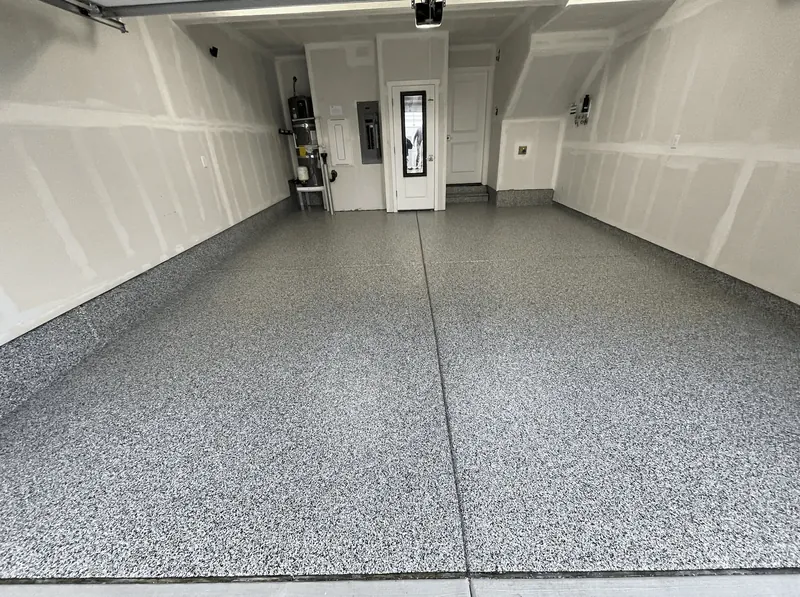
Gray flake floor with a center control joint and a flake cove base in a long single-car garage
Frost gray flake with cove base More floors
The blue notes are for you and don't print. Bracketed fields are yours to fill in.

Limited warranty

[Your company name] · [Phone] · [Email]

Invoice no. [ ]

Completed: [MM/DD/YYYY]

Floor: [system, for example full-broadcast flake with polyaspartic topcoat], [__ sq ft], at [job address], for [customer name].

1. What this warranty covers

Warranty what you control: your workmanship. Delamination (the coating letting go of the concrete) is the failure customers care about and the one good prep prevents.

For [__ years] from the completion date, if the coating peels, flakes or lifts from the concrete because of how we installed it, we will repair the affected area at no charge for labor or materials.

Hot tire pickup (tires lifting the coating): [covered / not covered].

2. The manufacturer's warranty

Know what the maker covers: usually replacement material that fails from a defect, often for a limited time, and not the labor to put it down.

The coating products carry their manufacturer's own warranty, if any, which is separate from this one: [manufacturer, product and warranty terms, or "none"].

3. What this warranty does not cover

Exclude what you don't control, and say so before the job, in the estimate and the scope of work, not for the first time when a claim comes in.
  • Damage from impact, dropped or dragged objects, sharp objects, or metal wheels and stands.
  • Chemicals left on the floor, and stains. [Chemicals the products are rated for are listed on their data sheets.]
  • Cracks that open or move in the concrete after installation, and coating cracks along them, including at joints.
  • Moisture or water pressure coming up through the slab [above the levels measured before installation / after the moisture test on (date)].
  • Yellowing or color change of epoxy layers from sunlight or UV light.
  • Normal wear, scratches and loss of gloss.
  • Damage from flooding, fire, settlement of the slab or other events outside our control.
  • Floors repaired, recoated or altered by anyone else, or not cared for as described in section 4.

4. Your part

  • Keep off the floor until the return-to-service times we gave you: light foot traffic from [ ], vehicles from [ ].
  • Sweep regularly and clean with a soft mop or pad and a mild cleaner; wipe up spills promptly. [Cleaners to avoid.]
  • Use walk-off mats at entrances. Where vehicles park, a small piece of non-porous material under each tire helps prevent tire marks.
  • Tell us within [30] days of noticing a problem, and let us inspect the floor.

5. How to make a claim

  1. Contact us at [phone / email] with your invoice number and photos of the problem.
  2. We will inspect within [__ business days].
  3. If the problem is covered, we will repair the affected area within [__ days], when the temperature and humidity allow the products to cure.
  4. Repairs may not exactly match the original color or flake pattern. Repaired areas stay covered for the rest of the original warranty period.

6. Limits

Have an attorney review this section. Federal law (the Magnuson-Moss Warranty Act) sets rules for written warranties on consumer products, including products installed in a home, such as labeling them "full" or "limited"; it does not apply to warranties on services. State laws add their own rules.

This warranty is limited to repairing the affected area of the floor. [Wording on other costs and implied warranties, as your attorney advises.] It [does / does not] transfer to a new owner of the property.

Signed

Contractor signature and date
Customer signature and date

Make it yours

How to use the warranty template

  • Pick a term you can afford to honor on every floor, not the longest one in your market.
  • Back it with records: the moisture test, the profile you reached, the batch log and the photos from the job-day checklist show whether a failure was workmanship.
  • Put the same exclusions in the scope of work, so the customer sees them before the job, not after.
  • Hand it over at the final walkthrough with the care instructions, and keep a signed copy.

This template is an example to adapt, not legal advice. Warranty and consumer protection rules vary by state; have a local attorney review your final version.

Text me the editable copy

Leave your mobile number and we'll text you a link to an editable copy of these warranty terms.

Owner: create the editable Google Docs version of this template and the text message that sends its link to this form's leads.

Questions

Floor warranties: frequently asked questions

What should an epoxy floor warranty cover?

What you control: the coating letting go of the concrete (delamination) because of how it was installed. Some installers also cover hot tire pickup; decide whether yours does and say so. Say how long, what the remedy is (usually repairing the affected area) and how to make a claim.

What do epoxy floor warranties usually exclude?

Things the installer does not control: impact and gouges, chemicals left on the floor, cracks that open in the concrete after installation, moisture or water pressure from below the slab, UV yellowing of epoxy layers, normal wear and gloss loss, and floors repaired by someone else or not cared for as instructed.

Is the manufacturer’s warranty the same as mine?

No. The coating maker’s warranty, if there is one, usually covers replacement material only, not the labor to put it down, and often for a limited time. Your workmanship warranty is a separate promise, and customers should get both in writing.

Does federal warranty law apply to a floor warranty?

It can. The Magnuson-Moss Warranty Act covers written warranties on consumer products, including products installed in a home, and requires them to be labeled “full” or “limited”; it does not apply to warranties on services. Which side your floor warranty falls on is a question for your attorney.

How long should an epoxy floor warranty be?

Long enough to show you stand behind the work and short enough that you can afford to honor every claim. Whatever you choose, tie it to your prep and moisture records, because those are what show a failure was or was not workmanship.

Watch every step before you do it

The Epoxy Playbook: full installations recorded start to finish, which you can replay as often as you need, plus pricing, quoting and selling the job.

See what the Playbook covers