Key takeaways
- Arizona licenses floor-coating work through the Registrar of Contractors; the floor covering (R-8, C-8, CR-8) and painting (R-34, C-34, CR-34) classifications both cover it.
- The unlicensed exemption covers only whole jobs under $1,000 that need no permit, and installed garage floors typically start around $1,200, so plan on a license.
- An Arizona LLC costs $50 to file and files no annual report; outside Maricopa and Pima counties you also publish a notice of the filing.
- Phoenix's normal July low is 84.5°F, so summer slabs start the day near the top of the 60–85°F range a typical flake system is written for: coat at first light and mix small batches.
- In Maricopa County, Rule 335 limits the VOC content of the coatings you apply, and it binds installers as well as sellers.
Arizona is a licensed state with an easy winter and a brutal summer. Almost every paid coating job needs a Registrar of Contractors license, the LLC is cheap and simple, and the weather turns the usual calendar around: winter is the comfortable season, and summer work starts at first light.
Do you need a license for epoxy floors in Arizona?
Yes, for almost any paid job. The Registrar of Contractors (ROC) licenses coating work under two families of classifications:
- Floor covering: R-8 (residential), C-8 (commercial) and CR-8 (both). The classification lists concrete coatings by name.
- Painting and wall covering: R-34, C-34 and CR-34. The classification lists liquid floor and wall coatings.
Choose the family that fits the rest of your work, and the dual CR license if you’ll coat both garages and commercial floors. To get licensed, a qualifying party passes the statutes-and-rules exam and the trade exam, the business posts a bond sized by classification and expected volume, and residential licensees pay into the Residential Contractors’ Recovery Fund, which compensates homeowners harmed by a licensee’s violations. Apply on the ROC site.
The $1,000 exemption won’t carry a coating business
You can skip the license only when the whole job, labor and materials together, comes to less than $1,000, needs no building permit and isn’t part of a larger project, and only if your ads say you are not a licensed contractor. Splitting one job into smaller contracts to get under the line doesn’t qualify. Installed garage floors typically run $1,200 to $3,900 for one car and $1,600 to $5,800 for two, so nearly every garage job is over the limit.
Your ROC number goes on everything
Show “ROC” and your license number on every bid, estimate, contract and ad; web, radio, billboard and vehicle ads may instead link to a website that displays it prominently. A contract over $1,000 with a property owner must be written, with your license number, the work, the total price and payment schedule, and a bold notice that the owner can complain to the ROC. Our estimate template has room for all of it.
Setting up the business: LLC, taxes and workers’ comp
Forming an LLC costs $50 with the Arizona Corporation Commission, with an Arizona statutory agent. If the agent’s address is outside Maricopa and Pima counties, you also publish a notice of the filing in a local newspaper; inside them, the Commission posts it for you. There’s no annual report, so keep the agent and address on file current: they’re how the Commission tells a working LLC from an abandoned one.
Transaction privilege tax (TPT) treats coating work differently from new construction. Coating an existing floor counts as maintenance, repair, replacement or alteration, and that income isn’t taxed as prime contracting. You pay tax on your materials when you buy them, and if all your work falls in that category you don’t need a TPT license. New-build jobs are taxed as prime contracting, so settle the rules with your accountant before you bid one.
Workers’ comp is required as soon as you regularly employ one worker. Buy it before your first helper’s first day, not after the first injury.
Safety is enforced by ADOSH, the state’s own plan for private employers, including the silica rules for grinding concrete; see dust extractors and silica rules.
Heat, monsoon and dust: installing in Arizona
A typical flake system is written for air, slab and material between 60°F and 85°F, with the slab at least 5°F above the dew point. Arizona’s climates sit in very different places against that range:
| City | Normal July high | Normal July low | Normal January high | Normal January low |
|---|---|---|---|---|
| Phoenix | 106.5°F | 84.5°F | 67.6°F | 46.0°F |
| Tucson | 100.2°F | 76.3°F | 66.5°F | 40.8°F |
| Flagstaff | 82.0°F | 51.4°F | 43.4°F | 17.6°F |
Summer in Phoenix and Tucson. A Phoenix July night normally bottoms out at 84.5°F, and in July 2026 several nights never dropped below 93°F. A garage slab starts those days near or above the top of the range and climbs from there. Heat shortens pot life and working time, and it works fastest on material sitting in a bucket. What that means on the job:
- Start at first light and finish the base coat and broadcast before the sun reaches the door.
- Store kits in an air-conditioned room overnight, never in the truck or the trailer.
- Mix smaller batches and get them out of the bucket and onto the floor quickly.
- Measure the slab with an infrared thermometer before you mix and compare it with the data sheet’s upper limit.
- Ask your supplier about slow-cure versions of your products for June through September.
Monsoon season officially runs June 15 to September 30, and it changes the air you cure in. Average afternoon humidity in Phoenix is 12% in June and 24% in August, when mornings average 47%. Polyaspartic cures with moisture from the air: a slow-cure polyaspartic that gives about 70 minutes of working time at 20% humidity gives about 28 minutes at 80%. A product that felt easy in dry June turns fast once monsoon moisture arrives, so recheck your batch size. Storms also bring dust: close the door when one builds, and don’t broadcast or roll a top coat with one on the way.
Winter in the desert is the forgiving season. A normal January day in Phoenix reaches 67.6°F and drops to 46°F at night, so measure the slab before an early start. Flagstaff has real winters, with a normal January low of 17.6°F: keep the floor at 60°F or more for two days before you coat, with electric or vented indirect heat, never an unvented propane heater, which causes amine blush. The guide to cure time, temperature and humidity has the full rules.
Maricopa County’s coating rule
Maricopa County’s air quality Rule 335 limits the VOC content of architectural coatings, and it applies to anyone who applies them in the county, not only to the stores that sell them. Don’t apply a coating over its category’s limit or thin one past it, and keep cans of coating, thinner and cleanup solvent closed. A stricter revision adopted in December 2024, with a separate floor-coating limit, takes effect only if the EPA reclassifies the Phoenix area’s ozone status, so ask the county’s Air Quality Department which version applies, then check the VOC figure on every data sheet, especially solvent-based sealers.
Where the work is in Arizona
Arizona had 7,623,818 residents on July 1, 2025, and added 67,394 that year, the seventh-largest gain of any state. Most of that growth lands in metro Phoenix. Maricopa County, with 4,689,558 residents, is the fourth most populous county in the country and added 35,411 people in a year, the third-largest gain of any county. Next door, Pinal County grew 4.6%, the seventh-fastest rate of any county, and the Phoenix metro as a whole added 59,065 people, fourth among the country’s metros.
New homes and new owners are where garage work comes from, so the Phoenix suburbs (Mesa, Chandler, Gilbert, Scottsdale, Glendale, Peoria and Surprise) and the Pinal County towns to the southeast are the core of the market, with Tucson second. Flagstaff runs on the opposite calendar: its summer, with July highs near 82°F, is its easiest installing season.
Where to take an epoxy class in and near Arizona
E2U, a coatings manufacturer, runs the only hands-on class we list in Arizona: one day on a garage system at its Phoenix location, covering grinding and prep, flake broadcast and scrape, and a polyaspartic top coat. One day shows the full sequence on one floor; plan on more practice before you quote paid work. Longer classes are a drive away:
| Class | Where | Length | Price |
|---|---|---|---|
| E2U garage system class | Phoenix | 1 day | $299 |
| E2U Become a Pro | Anaheim, CA | See provider | $150 |
| Xtreme Polishing Systems | Los Angeles, CA | 3 or 5 days | $1,350 or $1,750 |
| Xtreme Polishing Systems | Las Vegas, NV | 5 days | $1,750 |
Las Vegas is about a five-hour drive from Phoenix, and the five-day course works out to $350 a day ($1,750 ÷ 5).
Epoxy Business School classes in Arizona
Epoxy Business School hasn’t scheduled an Arizona class yet. Classes open state by state with partner trainers who install floors for a living, wherever enough people ask. Every student first completes The Epoxy Playbook: recorded hands-on training that follows full installations from prep and grinding through repairs, base coats, flake broadcast and top coats, with the business side on top. Replay any step before and after class, so the two days on the slab go to practice. Leave your number below and we’ll text you when an Arizona class is set.
Classes in and near Arizona
Listed so you can compare; not an endorsement or a partnership. Confirm dates and prices with the provider before you book.
| Provider | Where | Format | Price | Notes |
|---|---|---|---|---|
| E2U | Phoenix | 1 day, hands-on garage system | $299 | Manufacturer class: grinding and prep, flake broadcast and scrape, polyaspartic top coat. Next listed date: November 14, 2026. |
| E2U | Anaheim, CA | Become a Pro class | $150 | Manufacturer class. Next listed date: November 20, 2026. |
| Xtreme Polishing Systems (Polished Concrete University) | Los Angeles, CA | 3 or 5 days | $1,350 (3 days); $1,750 (5 days) | Prep, concrete testing, cove base, flake, metallic and quartz. |
| Xtreme Polishing Systems (Polished Concrete University) | Las Vegas, NV | 5 days | $1,750 | Same five-day curriculum as Los Angeles. |
Cities in Arizona
- Phoenix
- Tucson
- Mesa
- Chandler
- Gilbert
- Scottsdale
- Glendale
- Tempe
- Peoria
- Surprise
- Flagstaff
- Yuma
Questions
Do I need a license to install epoxy floors in Arizona?
Yes, for almost any paid job. The Registrar of Contractors licenses floor coatings under the floor covering (R-8, C-8, CR-8) and painting (R-34, C-34, CR-34) classifications. The only exemption is for a whole job under $1,000, labor and materials included, that needs no permit and isn't part of a larger project, and your ads must then say you aren't a licensed contractor.
When is the best time of year to coat floors in Phoenix?
Late fall through spring. A normal January day in Phoenix reaches about 68°F, inside the 60–85°F range a typical flake system is written for once the garage warms up. Summer jobs work with dawn starts, cool storage for materials and small batches, but July nights normally bottom out at 84.5°F, so slabs start the day hot.
How much does it cost to form an LLC in Arizona?
$50 to file the articles of organization with the Arizona Corporation Commission, and LLCs file no annual report. If your statutory agent's address is outside Maricopa and Pima counties, add the cost of publishing a notice of the filing in a local newspaper.
Do I charge sales tax on a garage floor in Arizona?
Coating an existing floor counts as maintenance, repair, replacement or alteration work, which isn't taxed as prime contracting. You pay tax on your materials when you buy them instead, and you don't need a TPT license if that's all the work you do. New construction is taxed differently.
Where can I take an epoxy flooring class in Arizona?
E2U runs a one-day hands-on garage system class in Phoenix for $299. For longer training, Xtreme Polishing Systems runs three- and five-day courses in Los Angeles and a five-day course in Las Vegas. Epoxy Business School's two-day class opens in Arizona when enough people ask; leave your number on this page.
Keep reading
License requirements by state
California
Classes by state
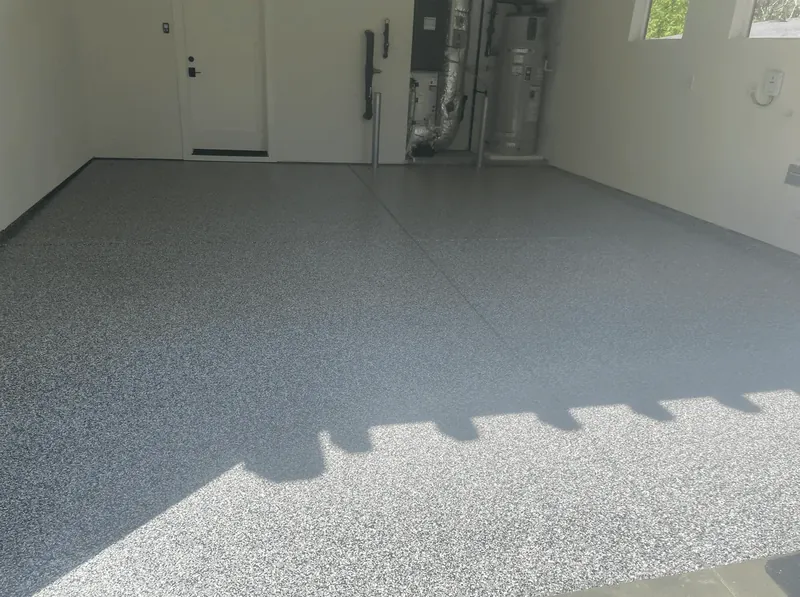
Epoxy cure time: how temperature, humidity and dew point change it
Epoxy and polyaspartic cure times from real data sheets: pot life, recoat windows, foot and vehicle traffic, the 5°F dew point rule, and cold-weather planning.
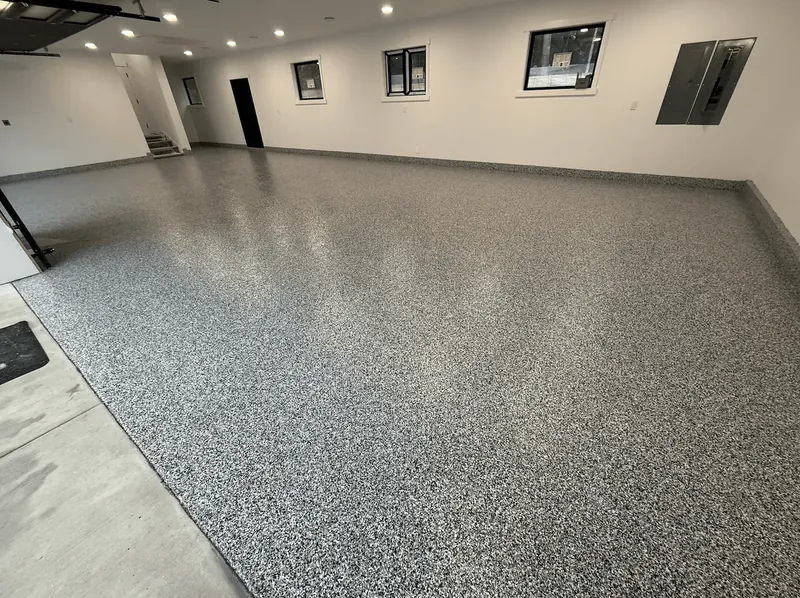
Polyaspartic vs epoxy floor coatings: how they differ and when to use each
Polyaspartic vs epoxy compared from data sheets: chemistry, working time, cure speed, UV stability, temperature, odor and cost, and the systems that use both.
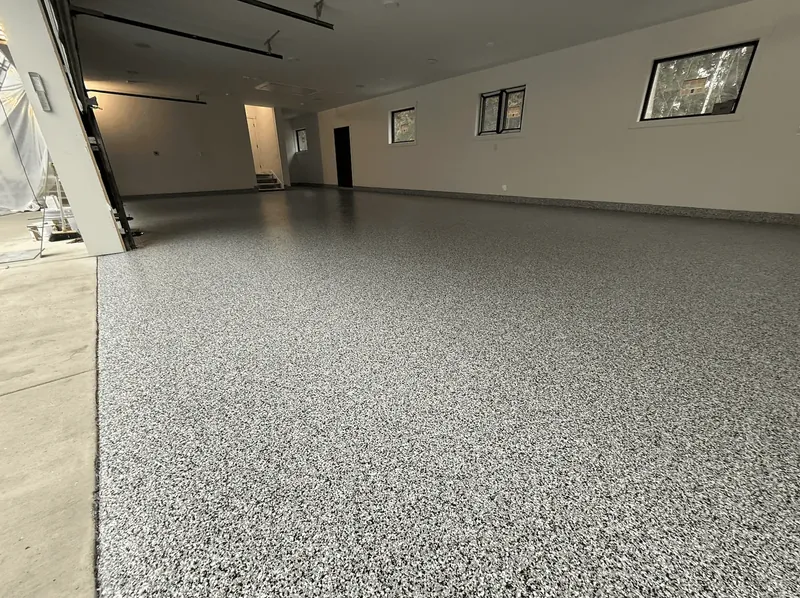
How to start an epoxy flooring business
Start an epoxy flooring business step by step: training, LLC, insurance, equipment to rent or buy, pricing and first jobs, with published prices.