Key takeaways
- North Carolina requires a general contractor license only for projects of $40,000 or more, so most garage and residential floor work needs no state license.
- Above $40,000, the S(Interior Construction) classification, which includes flooring and finishing, covers coating work.
- For sales tax, painting a floor counts as a capital improvement, while refinishing an existing floor is a taxable repair service; decide which each job is before you invoice.
- An LLC costs $125 to form and $200 a year for the annual report, due April 15.
- Charlotte and Raleigh average about 90°F in July and about 32°F on January nights, so plan for the dew point in summer and cold slabs in winter.
North Carolina lets a coating business start small. There’s no state license until a project reaches $40,000, the LLC costs $125, and Charlotte and the Triangle are among the fastest-growing metros in the country. The rules that need the most care are sales tax, which depends on what kind of floor job you’re doing, and a climate that swings from humid summers to freezing winter mornings.
Do you need a license for epoxy floors in North Carolina?
Only for big jobs. North Carolina doesn’t license coating trades; the Licensing Board for General Contractors licenses general contractors, and the license applies when the total project cost is $40,000 or more. You need it before you bid a job that size, not just before you build it. Below $40,000, the state requires no license for the work.
Garage floors sit far below the line: an installed two-car garage typically runs $1,600 to $5,800. A residential coating business can run for years without a state license. Commercial work is where it changes, because a warehouse, a plant floor or a large retail floor can pass $40,000. To bid those, you need a license in a classification that covers floors: S(Interior Construction), which includes flooring and finishing, or the broader Building or Residential classifications. You can look up licensees and start an application on the NCLBGC site.
Sales tax depends on the kind of floor job
This is the North Carolina rule that catches new coating companies. The state taxes repair, maintenance and installation services on real property, but not capital improvements; on a capital improvement, the contractor pays tax on the materials and doesn’t charge sales tax on the contract. The Department of Revenue’s chart for services to real property sorts floor work like this:
| Floor work | Treated as | What you do |
|---|---|---|
| Painting floors (and painting real property generally) | Capital improvement | Pay tax on materials; no sales tax on the contract |
| Waterproofing, staining or varnishing floors, when it isn’t part of refinishing | Capital improvement | Pay tax on materials; no sales tax on the contract |
| Refinishing existing floors, including painting or coating as part of the refinish | Taxable service | Collect and remit sales tax |
| Repairs or partial replacement of flooring | Taxable service | Collect and remit sales tax |
A first coating on bare concrete and a recoat of a worn system can fall on different sides of that line. Settle with your accountant how you’ll classify each kind of job, keep the paperwork that shows it, and register to collect sales tax if any of your work is taxable.
Setting up the business: LLC, annual report and workers’ comp
Forming an LLC costs $125 with the Secretary of State. Every year after the year you form, the LLC files an annual report for $200, due April 15.
Workers’ comp is required once you have three regular employees, counting full-time, part-time, regular seasonal and family workers. In a sole proprietorship, partnership or LLC, the owners don’t count toward the three; a corporation counts its officers. The bigger practical rule is for subcontractors. A general contractor who hires a sub without first getting a certificate of insurance can be liable for that sub’s injured employees, even when the sub has fewer than three, so general contractors ask every sub for a certificate. A sub with no employees may be asked to buy coverage or to let the contractor deduct its cost from the payment.
Safety is enforced by the North Carolina Department of Labor, which runs the state’s own plan for private employers, including the silica rules that apply when you grind concrete. A shroud and a HEPA dust extractor belong in the starting kit; see dust extractors and silica rules.
Humid summers, frozen mornings: installing in North Carolina
The Piedmont’s summers are hot and humid and its winters bring regular freezing nights. The mountains and the coast each shift the picture:
| City | Normal July high | Normal July low | Average morning humidity, July–August | Normal January low |
|---|---|---|---|---|
| Charlotte | 90.3°F | 69.9°F | 84–87% | 31.8°F |
| Raleigh | 90.8°F | 70.2°F | 86–89% | 31.8°F |
| Greensboro | 88.5°F | 69.3°F | 85–88% | 30.1°F |
| Wilmington | 90.0°F | 73.0°F | 85–88% | 36.3°F |
| Asheville | 85.3°F | 64.9°F | 92–94% | 28.6°F |
Summer. Keep the slab at least 5°F above the dew point before, during and after you coat. At 80°F and 80% humidity the dew point is 73°F, so a slab at 75°F that feels warm is still too close. What that means on the job:
- Measure the slab, not just the air, and check the dew point before every coat.
- Polyaspartic cures with moisture from the air: a slow-cure polyaspartic that gives about 70 minutes of working time at 20% humidity gives only about 28 minutes at 80%. On humid mornings, mix less at once.
- Start early; afternoon heat shortens pot life, fastest on material left in the bucket.
- Keep the door closed and run a dehumidifier when a front or a coastal storm pushes humidity up.
Winter. Charlotte and Raleigh both have a normal January low of 31.8°F, and Asheville’s is 28.6°F, so an unheated garage slab can start a January morning far below 60°F. Slabs at 55°F or lower dry slowly and bond poorly. Keep the floor at 60°F or more for two days before you coat, using electric or vented indirect heat, never an unvented propane heater, which adds moisture and carbon dioxide and causes amine blush. Expect longer recoat windows and later traffic times, and tell the customer before you start. The guide to cure time, temperature and humidity has the details.
Where the work is in North Carolina
North Carolina had 11,197,968 residents on July 1, 2025, and added 145,907 that year, the third-largest gain of any state; its 1.3% growth rate was also third. The growth is concentrated in two metros. Charlotte–Concord–Gastonia added 54,122 people, fifth among the country’s metros, and Mecklenburg County alone added 26,554. In the Triangle, Wake County added 27,760, the fifth-largest gain of any county, and Raleigh–Cary grew 2.4%, one of the ten fastest rates of any metro. On the coast, the Wilmington metro grew 2.6% and neighboring Brunswick County 4.7%, also among the fastest in the country.
New homes and new owners mean garage work, so the suburbs around Charlotte (Concord, Gastonia, Huntersville, Matthews) and the Triangle (Cary, Apex, Wake Forest, Durham) are the core of the residential market, with the Triad (Greensboro, Winston-Salem, High Point), Fayetteville, Wilmington and Asheville behind them.
Where to take an epoxy class in and near North Carolina
Epoxy Depot, a coatings supplier, runs a three-day hands-on Intro to Epoxy class at its Charlotte and Raleigh/Durham stores, covering surface prep, crack filling, flake, solid color and metallic floors, with materials included. Both stores post their next dates on the chain’s schedule, and the price comes from the store. If neither date works, the chain also runs an intro class at its Duncan, South Carolina store, about 90 minutes from Charlotte, and at its Nashville store. Blessed By Chris Academy, run by an Atlanta coating company, holds a four-day class in Atlanta.
A supplier class teaches on the products the store sells. That’s useful if you plan to buy from that store; if you don’t, ask which steps carry over to other brands.
Epoxy Business School classes in North Carolina
Epoxy Business School hasn’t scheduled a North Carolina class yet. Classes open state by state with partner trainers who install floors for a living, in the states where enough people ask. Every student first completes The Epoxy Playbook: recorded hands-on training that follows full installations from prep and grinding through repairs, base coats, flake broadcast and top coats, with the business side on top. You can replay any step before and after class, so the two days on the slab go to practice. Leave your number below and we’ll text you when a North Carolina class is set; if you also work in South Carolina, Virginia or Tennessee, the license requirements by state cover those rules.
Classes in and near North Carolina
Listed so you can compare; not an endorsement or a partnership. Confirm dates and prices with the provider before you book.
| Provider | Where | Format | Price | Notes |
|---|---|---|---|---|
| Epoxy Depot | Raleigh/Durham | 3 days (Intro to Epoxy) | Ask the store | Prep, crack filling, flake, solid color and metallic; materials included. Next class October 29–31, 2026. |
| Epoxy Depot | Charlotte | 3 days (Intro to Epoxy) | Ask the store | Same intro class. Next class November 19–21, 2026. |
| Epoxy Depot | Duncan, SC | 3 days (Intro to Epoxy) | Ask the store | Next class November 12–14, 2026. |
| Epoxy Depot | Nashville, TN | 2–3 days (Intro to Epoxy) | Ask the store | Materials and lunch included, certificate of completion. The store lists a two-day class; the chain's schedule shows three-day dates, so confirm the length. |
| Blessed By Chris Academy | Atlanta, GA | 4 days, hands-on | See provider | Run by an Atlanta coating company: installation, metallic epoxy, pricing and marketing. |
Cities in North Carolina
- Charlotte
- Raleigh
- Durham
- Greensboro
- Winston-Salem
- Fayetteville
- Cary
- Wilmington
- High Point
- Concord
- Asheville
- Gastonia
Questions
Do I need a license to install epoxy floors in North Carolina?
Only for projects of $40,000 or more. North Carolina licenses general contractors, not coating trades, and the license applies when the total project cost reaches $40,000; you need it before you bid. Residential garage and basement floors almost never get close.
Do I charge sales tax on epoxy floors in North Carolina?
It depends on the job. Painting floors, and waterproofing, staining or varnishing them when it isn't part of a refinish, count as capital improvements: no sales tax on the contract, but you pay tax on your materials. Refinishing an existing floor, and repairs, are taxable services you collect tax on, so register and classify each job before you invoice.
How much does an LLC cost in North Carolina?
$125 to file the articles of organization, then a $200 annual report due April 15 every year, starting the year after you form.
Do I need workers' comp for a small coating crew in North Carolina?
From the third regular employee, counting part-time, seasonal and family workers but not the owners of a sole proprietorship, partnership or LLC. If you sub for general contractors, expect them to ask for a certificate of insurance anyway, because a contractor who hires an uninsured sub can be liable for that sub's employees.
Where can I take an epoxy flooring class in North Carolina?
Epoxy Depot runs a three-day hands-on intro class at its Charlotte and Raleigh/Durham stores, with materials included. The next nearest are its classes in Duncan, South Carolina, and Nashville. Epoxy Business School's two-day class opens in North Carolina when enough people ask; leave your number on this page.
Keep reading
License requirements by state
Georgia
Tennessee
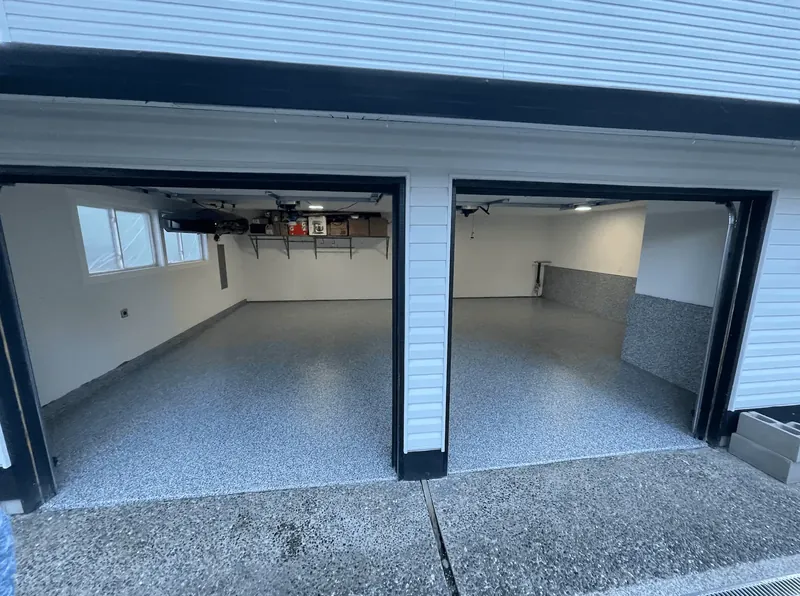
Classes by state
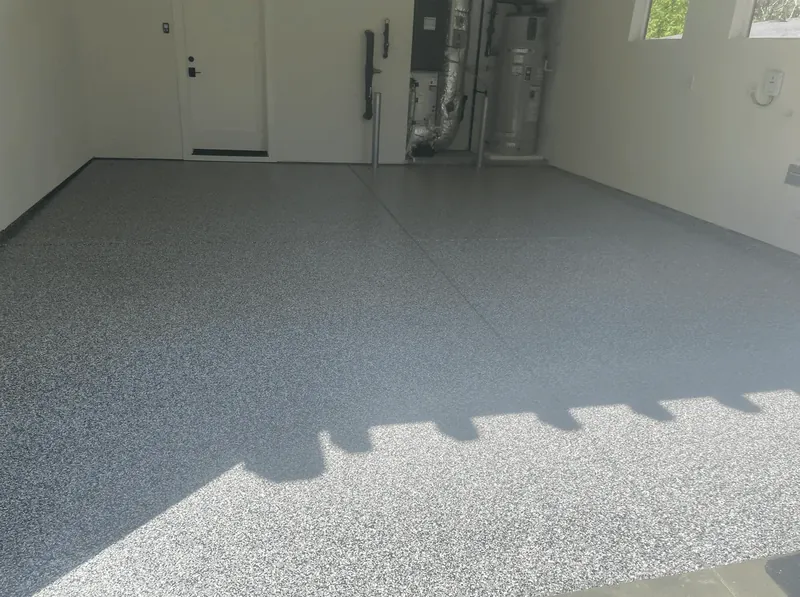
Epoxy cure time: how temperature, humidity and dew point change it
Epoxy and polyaspartic cure times from real data sheets: pot life, recoat windows, foot and vehicle traffic, the 5°F dew point rule, and cold-weather planning.
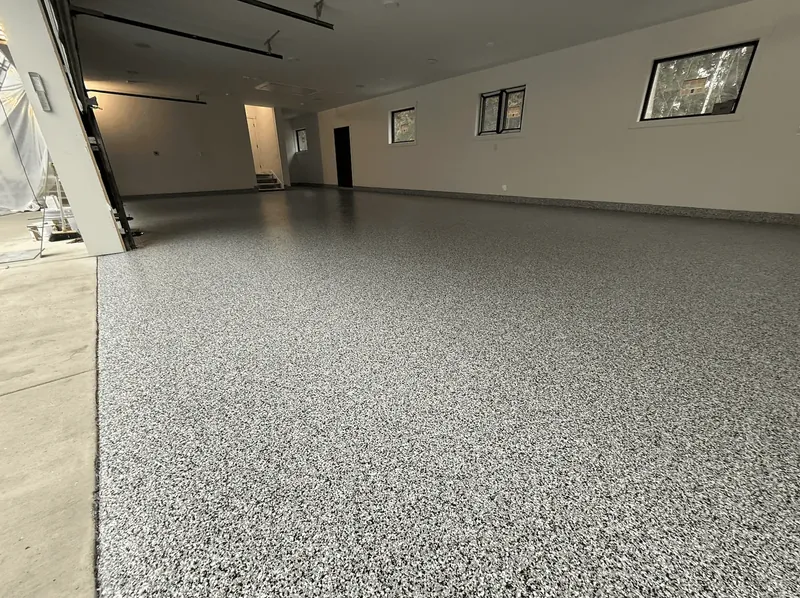
How to start an epoxy flooring business
Start an epoxy flooring business step by step: training, LLC, insurance, equipment to rent or buy, pricing and first jobs, with published prices.