Key takeaways
- Homeowners search for coating companies in volume: 'epoxy flooring companies near me' draws 10K–100K searches a month in the US, and 'garage floor coating companies near me' 1K–10K, up 900% year over year.
- Start with the channels you own: a verified Google Business Profile, a simple website with your own job photos, and a steady habit of asking every customer for a review.
- Paid channels charge differently: Local Services Ads per valid lead, Google search ads per click, Meta lead forms per impression, Angi when you and the homeowner both show interest.
- Flooring leads typically cost about $45–62 each from Local Services Ads and $48–122 from Google search ads.
- Divide cost per lead by your close rate to get the cost of a booked job, and track every lead's source from the first day.
Epoxy flooring marketing works best in a set order: first the channels you own and that cost time rather than money (a verified Google Business Profile, a simple website with your own job photos, reviews, and signs and letters around every job), then paid channels one at a time, each tracked by what it costs per booked job. Flooring leads typically cost about $45–62 each from Google Local Services Ads and $48–122 from Google search ads, so slow responses or a low close rate make paid leads expensive fast.
This guide covers every channel coating contractors commonly use, how each one charges, and a 90-day plan for a new business. For the math of buying leads, see epoxy flooring leads; for the profile itself, see Google Business Profile for epoxy contractors.
The demand is there: what homeowners search for
Monthly US searches, September 2025 to August 2026:
| Search phrase | Searches a month | Year-over-year change |
|---|---|---|
| epoxy flooring companies near me | 10K–100K | 0% |
| epoxy floor installation cost | 10K–100K | 0% |
| epoxy companies near me | 1K–10K | 0% |
| epoxy floor company near me | 1K–10K | 0% |
| garage floor coating companies near me | 1K–10K | +900% |
| epoxy garage floor cost | 1K–10K | 0% |
More numbers on the trade are in epoxy flooring industry statistics.
Two things follow. People look for a company nearby, so local visibility (your profile, your reviews, local ads) matters more than national reach. And many searches are about cost, so a website that talks plainly about price ranges answers the question buyers are actually asking.
Every channel at a glance
| Channel | How you pay | Typical cost | What it’s good for |
|---|---|---|---|
| Google Business Profile | Free; your time | — | Showing up in the map results for “near me” searches |
| Your website | Hosting and setup | — | Answering questions, showing work, taking quote requests |
| Reviews | Free; a habit | — | Trust; every other channel converts better with them |
| Referrals, neighbors, yard signs | Sign and printing costs | — | The cheapest jobs you’ll ever book |
| Before-and-after content | Your time | — | Proof of work on every channel |
| Local Services Ads | Per valid lead | About $45–62 per flooring lead | Calls from people ready to hire |
| Google search ads | Per click | About $48–122 per flooring lead | Control over keywords, areas and budget |
| Meta lead ads | Per impression | Depends on your targeting and ads | Reaching homeowners before they search |
| Angi, Thumbtack | Per lead, prices vary | Varies by job and market | Volume, usually shared with other pros |
| Home shows | Booth fee | Varies by show | Face-to-face selling with samples |
| Builders, realtors, property managers | Your time | — | Repeat work |
| Commercial outreach | Your time | — | Larger jobs, off-season work |
Lead costs vary with local competition, the season and the job; the ranges above cover most flooring businesses nationally.
1. Google Business Profile
Your profile is what shows up when someone searches “epoxy flooring companies near me” and looks at the map. Google’s guidelines set the rules that matter most for a coating contractor:
- Service-area business. If you travel to customers and don’t serve them at your address, you’re allowed one service-area profile and should hide your address. Your service area shouldn’t extend farther than about two hours’ driving time from where you’re based.
- Your real name only. No keywords, city names or taglines added to the business name unless they’re part of your real name.
- Few, specific categories. Use as few categories as possible and pick the one that completes “This business IS a…”. There’s no epoxy-specific category; most coating companies choose Flooring contractor.
- Verification. Google may ask for a video showing your location, your equipment or branded materials, and proof you manage the business; reviews of verification take up to five business days.
Profiles that break the guidelines can be suspended. The full setup, with services, photos and posts, is in Google Business Profile for epoxy contractors.
2. A website that answers buyers’ questions
Your website doesn’t need to be large. It needs to answer what homeowners ask before they call:
- the area you serve and the systems you install (flake, metallic, quartz), each with photos of your own floors;
- how you prepare a slab, in plain words (grinding, repairs, moisture testing) and why it matters;
- what a typical floor costs, as a range, and what changes the price (see epoxy flooring cost per square foot);
- your warranty in one paragraph, and what it excludes;
- a short quote form and a phone number that someone answers.
Write the pages yourself, from your own jobs. A page that describes your process with your photos is more useful to a buyer, and to Google, than a generic page about “the benefits of epoxy.” The full page-by-page list is in what an epoxy flooring website needs.
3. Reviews: ask everyone, the right way
Reviews make every other channel work better, and the rules are strict:
- No incentives. Google prohibits offering free or discounted goods or services, payment or anything else in exchange for a review.
- No review gating. You can’t discourage negative reviews or ask only satisfied customers. Ask every customer.
- No staff quotas or scripts. Don’t ask staff to collect a set number of reviews or reviews with specific content.
- Federal rules apply too. The FTC’s rule on consumer reviews, in effect since October 21, 2024, bans fake reviews, review suppression through threats or intimidation, and undisclosed reviews by insiders such as employees and their relatives.
What works within the rules: ask at the final walkthrough when the customer is happy with the floor, send the review link or a QR code by text the same day, and reply to every review, good or bad, without promotional language.
4. Referrals, neighbors and yard signs
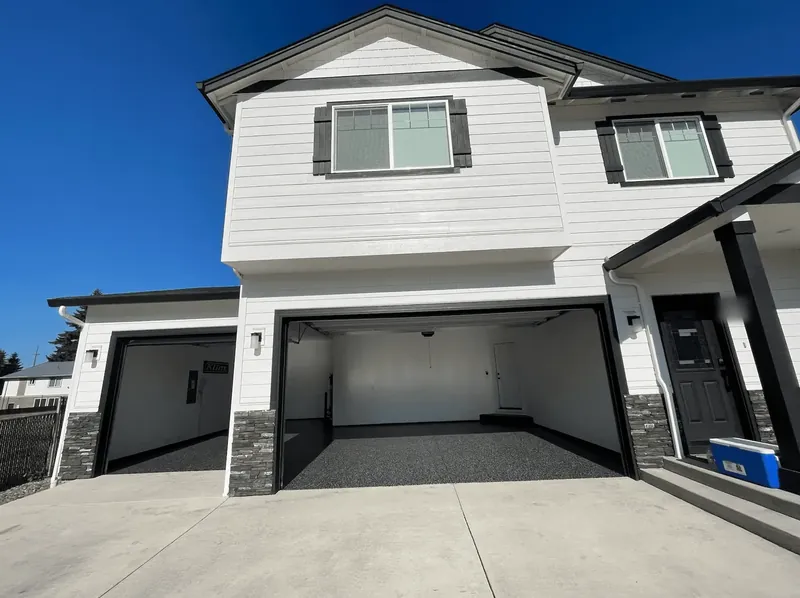
A coated garage is visible from the street while the door is open, and neighbors talk. Use every job to find the next one:
- Yard signs during and after the job, with the customer’s permission. Check your city’s sign rules and any HOA rules first.
- Neighbor letters or door hangers for the houses on the street, saying you’re working nearby and how to see the floor.
- A referral thank-you for customers who send you a paying job. That’s fine; just never tie a reward to a review.
- Staying in touch. A check-in a few weeks after the job, and again before warranty questions come up, keeps you the first name they mention.
5. Before-and-after content
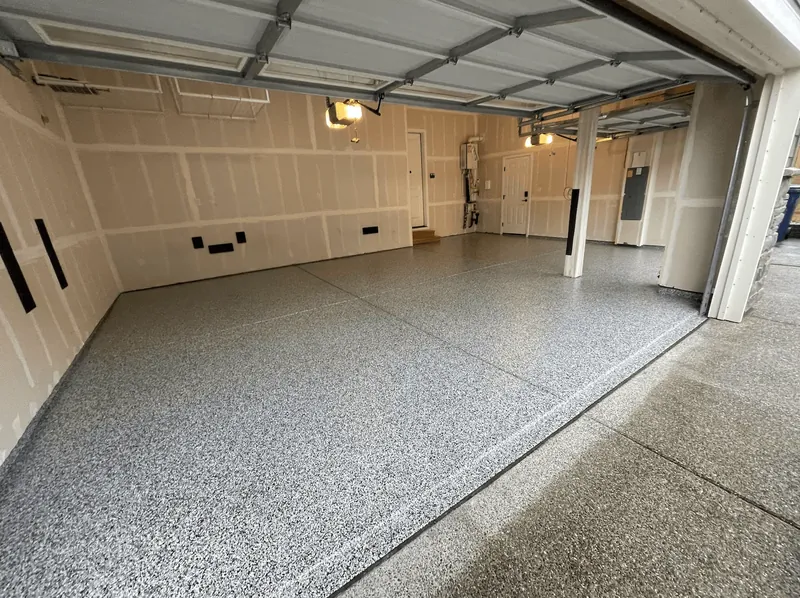
Photograph every job the same way: the slab before prep, during grinding and repairs, after each coat, and finished, from the same corners. Those photos feed your profile, your website and social posts, and they double as warranty documentation (see epoxy floor warranties). Get the customer’s written permission before you publish photos of their home, and keep house numbers and license plates out of the frame.
6. Local groups and community pages
Neighborhood Facebook groups and Nextdoor are where homeowners ask “who did your garage floor?” Join as yourself, follow each group’s rules on business posts, answer questions about floors honestly, and let past customers do the recommending. One helpful answer about moisture or hot-tire pickup does more than ten ads in the same group.
7. Google Local Services Ads
Local Services Ads appear at the top of Google for local service searches. How they differ from regular ads:
- You pay per lead, not per click. A charged lead is an answered call, a missed call during your business hours where the caller stays on the line more than 20 seconds, a message or voicemail, or a booking request. Follow-up contact with the same customer within 15 days isn’t charged again.
- Prices vary with your location, the job type, the type of lead and your bidding mode. You set an average weekly budget.
- Low-quality leads may be credited automatically.
- Screening first. The US Flooring services category requires general liability and professional liability insurance, state-level business and owner licenses where local law requires them, and background checks for some advertisers. Every advertiser needs a verified Google Business Profile, and screening takes 3–4 weeks on average after you submit documents.
- The product is changing. Google began moving Local Services Ads into Performance Max campaigns with pay-per-lead goals in August 2026, starting with trades such as plumbing, HVAC and roofing and expanding to more categories through 2027. Check the current setup when you sign up.
Because missed calls during business hours can be charged, answer the phone or forward it to someone who will. Flooring leads from this channel typically cost about $45–62.
8. Google search ads
With search ads you choose the keywords, the area and the budget, and you pay for each click; your maximum cost per click is the most you’ll typically be charged. Flooring leads from search ads typically cost about $48–122 once clicks turn into leads.
To keep the cost per lead down (the full setup is in Google Ads for epoxy flooring): target only the area you serve, bid on service phrases (“garage floor coating”, “epoxy flooring companies near me”), exclude phrases that bring the wrong people (“DIY”, “kit”, “jobs”, “training”, “rental”), send clicks to a page about the exact service with a short form, and track calls as well as forms.
9. Meta (Facebook and Instagram) ads
Meta lead ads let people request a quote on a form without leaving Facebook or Instagram. You don’t pay per lead: campaigns optimized for lead generation are billed on impressions, so your cost per lead depends on your targeting, your photos and your offer. Form leads are often earlier in the decision than someone who searched for a company, so call them back fast and expect a lower close rate than with search leads. Floors are visual, which is why before-and-after photos and short videos are what coating contractors commonly run; see Facebook and Instagram ads for epoxy flooring.
10. Angi and Thumbtack
Lead marketplaces send you homeowners who requested a project:
- Angi lead fees change with the task, the homeowner’s location and demand. You’re charged once both you and the homeowner show interest, whether or not you respond, and each request is matched with no more than five pros. You can request a credit for an invalid lead.
- Thumbtack also charges per lead, with prices that depend on the job and the market, and lets you set a budget.
Neither publishes flooring lead prices, and with up to five companies on the same request, speed decides who gets the appointment. Run the numbers in epoxy flooring leads before you commit a budget.
11. Home shows
Home and garden shows put you in front of homeowners who came to shop. Bring sample boards of each system, a price range card, and a sign-up sheet or form that asks permission to contact them. The show is only half the work: call or text every contact within a day, while they remember your booth.
12. Builders, realtors and property managers
Partners can send repeat work:
- Home builders offering garage-floor upgrades need a reliable schedule and a floor that’s done before closing.
- Realtors preparing listings want fast turnaround and a clean, photographable garage.
- Property managers and HOAs need documentation, insurance certificates and predictable pricing across many units.
All three will ask for proof of insurance. Epoxy flooring business insurance explains certificates of insurance and additional-insured requests.
13. Commercial outreach
Auto shops, gyms, warehouses, kennels, breweries and restaurants all have floors that wear out. Commercial work is slower to win but bigger per job and less seasonal. Build a list, visit with a one-page system sheet (the manufacturer’s data sheet plus your prep standard), and ask about the floor’s problems: chemicals, forklifts, wash-downs, slip resistance. Commercial prices and systems are in the cost per square foot guide.
Plan around the season
Weather limits when you can install, so it shapes when marketing pays. Epoxy should go down between 60°F and 85°F at less than 85% humidity. Polyaspartic can be applied in a much wider range of temperatures and humidity, which helps stretch the installing season. Spend more on ads in the weeks before your best installing months, book interior and commercial work for the off-season (see the epoxy flooring slow season), and check Google Trends for your own area to see when people start searching.
Track every lead from day one
Write down every lead: date, source, cost, whether you set an appointment, whether you quoted, whether you won, and the job value. Then:
- Cost per lead = spend on the channel ÷ leads from it
- Cost per booked job = cost per lead ÷ close rate
- Marketing cost per job = total marketing spend ÷ jobs booked
Example: at $62 a lead and an assumed 25% close rate, each booked job costs $62 ÷ 0.25 = $248 in leads. That $248 belongs in your overhead and in every price you quote (see how to price epoxy flooring). The lead cost calculator compares channels for you.
Rule of thumb: a channel is only cheap if it’s cheap per booked job. A $30 lead you close one time in ten costs $300 per job; a $90 lead you close one time in three costs $270.
A 90-day marketing plan for a new coating business
| Weeks | Do this |
|---|---|
| 1–2 | Claim and verify your Google Business Profile as a service-area business; choose your category and services; set up a phone number you’ll answer and a simple lead log |
| 3–4 | Publish a basic website: service area, systems, prep, price ranges, warranty summary, quote form; add photos from every job, including practice floors (labeled as such) |
| 5–6 | Ask every customer for a review with a link or QR code; put up yard signs and send neighbor letters on each job; tell builders, realtors and property managers you know what you do |
| 7–8 | Start one paid channel with a small weekly budget, usually Local Services Ads or search ads; answer every lead within minutes; log source and outcome |
| 9–10 | Calculate cost per lead and cost per booked job for the paid channel; fix the slow spots (response time, quote follow-up) before adding budget |
| 11–13 | Keep what pays, stop what doesn’t, and test a second channel; post before-and-after photos weekly; visit five commercial prospects |
Marketing is one of the Seven Systems in The Epoxy Playbook, which pairs recorded installation training, full jobs you can replay, with pricing, sales and the rest of the business side. When the leads start coming, the epoxy flooring sales process covers what to do with them.
Questions
What is the best marketing for a new epoxy flooring business?
Start with what costs time rather than money: a verified Google Business Profile, a basic website with your own before-and-after photos, reviews from every finished job, and yard signs and neighbor letters around each job. Add paid channels one at a time once you can answer leads quickly and track what each one costs per booked job.
How much do epoxy flooring leads cost?
Flooring leads typically cost about $45–62 each from Google Local Services Ads and $48–122 from Google search ads. What matters more is the cost per booked job: cost per lead divided by your close rate.
Can I give customers a discount for leaving a Google review?
No. Google prohibits offering incentives such as discounts, payments or free services in exchange for reviews, and it also prohibits asking only happy customers to review you. Ask every customer, make it easy with a review link or QR code, and reply to the reviews you get.
Can epoxy contractors use Google Local Services Ads?
Yes. Local Services Ads have a Flooring services category in the US. To advertise you need a verified Google Business Profile and must pass Google's screening, which for flooring includes general and professional liability insurance and state-level licenses where local law requires them. You pay per valid lead rather than per click.
When is the busy season for epoxy flooring?
It depends on your climate and your systems. Epoxy should go down between 60°F and 85°F at under 85% humidity, so cold or humid months slow garage work in many areas. Plan your ad spend around the months you can install, and line up basements, interior and commercial work for the rest of the year.
Keep reading
Epoxy flooring leads: the math of buying them, channel by channel
What epoxy flooring leads cost, how Local Services Ads, Angi, Thumbtack and Meta charge, shared vs exclusive leads, speed to lead, and cost per booked job.
Google Business Profile for epoxy contractors: setup, reviews and staying unsuspended
Set up a Google Business Profile for an epoxy flooring company: service area, name rules, categories, services, verification, photos, reviews and suspensions.
Lead cost calculator
The epoxy flooring sales process: from first call to signed contract
The in-home epoxy flooring sales process: pre-qualifying calls, measuring, moisture checks, three options, the $200 DIY kit objection, deposits and follow-up.