Key takeaways
- Rent the grinder and dust extractor first; buy them once you are grinding most weeks.
- A two-car garage floor sells for about $1,600–5,800 installed, or $4–10 a square foot, depending on the system and the slab.
- Insure before the first job: general liability for a flooring installer typically runs about $77 a month.
- Price from your full costs, not from materials: the truck, insurance, marketing and estimates that don't close all have to be in the price.
- Set up quotes, warranty terms, deposits and a job-day checklist before you are busy, not after the first callback.
You can start an epoxy flooring business by renting the big equipment and buying it once the jobs are steady. The order is: decide what you’ll install, get trained on real slabs, set up the business, line up equipment and a supplier, price the work so it pays, then win your first jobs. Below are the steps with published prices for each. For your own total, use the startup cost calculator.
1. Decide what you’ll install, and for whom
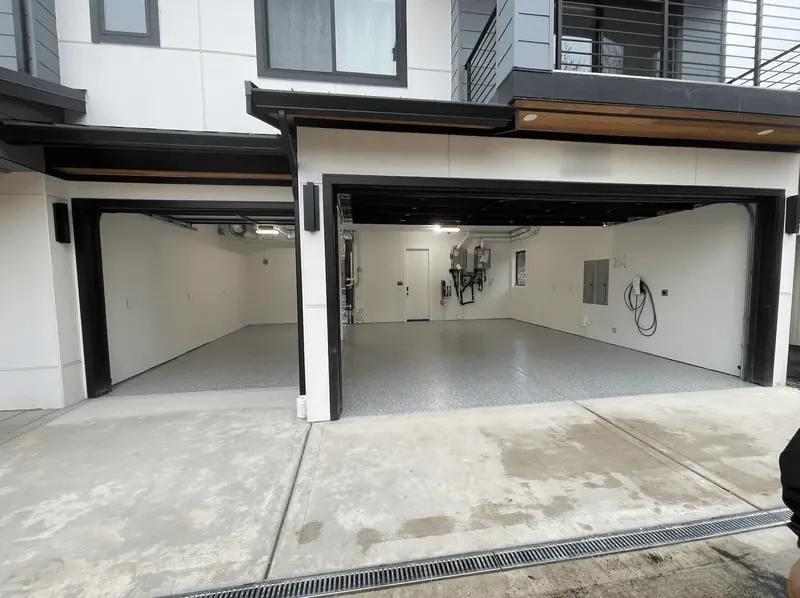
Many new coating businesses start with residential garages. The jobs take a day or two, the buyer is the homeowner, and full-broadcast flake systems are the usual choice. Basements, patios, pool decks and commercial floors use different systems, and often different equipment and insurance.
Know the market you’re entering: a two-car garage floor sells for about $1,600–5,800 installed, or about $4–10 a square foot, depending on the system and the condition of the slab. Our guide to epoxy flooring cost per square foot breaks that down by system. If you want to write it all down first, start with the epoxy flooring business plan.
2. Get trained on real slabs
US classes run from about $99 for a one-day class to $1,899 for a four-day academy. Our training page compares the classes running today, and the classes-by-state directory shows what’s near you.
Pick a class where you install the systems yourself, on real concrete. If it doesn’t cover pricing, quoting and selling, learn those separately before your first estimate. That’s what The Epoxy Playbook is for.
3. Set up the business
- Form an LLC. State filing fees run from $35 in Montana to $500 in Massachusetts, and most states charge $50–200. Some states add a yearly cost; California’s minimum franchise tax is $800 a year.
- Get an EIN and a business bank account. The EIN is free from the IRS. Keep job money and personal money apart from day one.
- Check licensing. Some states require a contractor license for flooring work, sometimes above a dollar threshold. Our license requirements by state page summarizes each state; confirm with your state’s board before you quote.
- Insure before the first job. Typical monthly costs for a flooring installer: general liability about $77 ($919 a year) for a $1 million / $2 million policy, workers’ compensation about $144 once you have employees, commercial auto about $208, and tools and equipment about $41. More in epoxy flooring business insurance.
4. Equipment: rent first, buy when the jobs are steady
The grinder and the dust extractor are the big decisions. Renting keeps your startup cost low while you learn what jobs you’ll actually get; buying makes sense once you’re grinding most weeks. The equipment list covers every tool, and the concrete grinder rental guide covers what to rent and where.
| Item | Rent | Buy new |
|---|---|---|
| Floor grinder, 22” dual-disc (EDCO 2EC class) | About $90–142 a day | $8,488 (EDCO 2EC-NG, 230V) |
| Floor grinder, 20” planetary | About $350–425 a day at specialty shops | About $15,700–17,800 |
| HEPA dust extractor | About $225 a week | About $3,400–3,900 for a mid-size unit (about 240 cfm), enough for a 7-inch edge grinder; small units ($1,900–2,400, about 125 cfm) are not |
| Diamond tooling | Often charged extra on rentals | About $195–530 a set (dual-disc) |
| Edge grinder kit: 7” grinder, dust shroud, cup wheels | Sometimes | About $640–716 |
| Application tools: squeegees, rollers, spiked shoes, mixers | — | About $150–320 a kit |
| Moisture testing | — | $12–36 per calcium chloride test; meters about $25–760 |
| Respirator, organic vapor with particulate filters | — | About $23–52 each |
| Enclosed trailer, 6×12 | — | About $3,450–5,000 |
Typical prices; get quotes before you buy. Check the voltage before you rent or buy: the larger grinders run on 230 volts, and many garages only have that at the dryer or range outlet. When renting stops making sense is a calculation, not a feeling: the rent-vs-buy calculator does it with your numbers.
5. Choose a supplier
Many hands-on classes are run by suppliers, and that relationship matters after class. A good supplier is more than a price list: local stock, technical support when a job goes wrong, clear data sheets, and warranty backing on the products. Compare those before you compare price per kit. Our epoxy flooring supplies guide lists what you’ll buy and the kinds of suppliers that sell it.
6. Price the work so it pays
Of the installed price, materials typically run about $1–5 a square foot and labor $3–5. Your price also has to carry what never shows up on the floor: the truck, insurance, marketing, the estimate visits that don’t close, and the occasional callback.
The pricing mistakes that cost new coating businesses the most:
- Pricing from materials alone.
- Charging the same per square foot for a 200 sq ft job as for a 600 sq ft job, instead of setting a minimum job price.
- Underpricing multi-visit systems: every extra trip is another crew day.
- Discounting on the spot, with no rule for who can discount and by how much.
- Leaving prep and repairs out of the quote.
How to price epoxy flooring walks through a full job price, and the job pricing calculator does the arithmetic. Pricing, quoting and the sales call are the core of The Epoxy Playbook.
7. Get your first jobs
- Set up a Google Business Profile with real photos of your floors (how to set it up for a coating company).
- Build a simple website with your service area, the systems you install, photos, and a way to ask for a quote.
- Ask every customer for a review, and for the neighbors who’ve asked about their floor.
- If you buy leads, know what they cost before you start.
| Channel | Cost per flooring lead | How it works |
|---|---|---|
| Google Local Services Ads | About $45–62 | You pay per lead, and the lead comes only to you |
| Google search ads | About $48–122 | You pay per click; this is the cost once clicks turn into leads |
| Lead marketplaces (Angi, Thumbtack) | Varies by market | The same homeowner usually hears from several contractors |
Your market will differ. Divide the cost per lead by your close rate to see what a booked job really costs; the lead cost calculator does that by channel, and epoxy flooring marketing covers every channel.
8. Put systems in place before you’re busy
- A quote template with a written scope of work (estimate template, scope of work).
- Warranty terms you can afford to honor (warranty template).
- A deposit policy.
- A job-day checklist: moisture test, prep standard, mix ratios, cure times, photos (job-day checklist).
- Follow-up: a thank-you, a review request, and a check-in before the warranty matters.
- A callback process, so one bad job doesn’t become a bad review.
Your first 90 days
Days 1–30
- Run your numbers with the startup cost calculator.
- Take a hands-on class.
- Form the LLC, get an EIN, open a business bank account.
- Check your state's licensing rules.
- Get general liability insurance.
- Open an account with a supplier.
Days 31–60
- Rent the grinder and do one or two practice floors: your own garage, or friends and family at cost.
- Photograph every step.
- Set up your Google Business Profile and a simple website.
- Write your quote template, scope of work and warranty terms.
Days 61–90
- Quote your first paid jobs.
- Track every lead's source and cost.
- Review your price after each job.
- Work out when buying the grinder beats renting it.
Questions
How much does it cost to start an epoxy flooring business?
It depends mostly on whether you rent or buy the grinder. If you rent, most of the startup cost is training, small tools, a dust extractor, insurance and setup. Buying a new dual-disc or planetary grinder plus a mid-size dust extractor adds roughly $12,000–22,000. Use the startup cost calculator with your own numbers.
Is epoxy flooring a good business to start?
It can be, if the jobs are priced to carry your overhead and the leads come in steadily. A two-car garage sells for about $1,600–5,800 installed, with materials about $1–5 a square foot of that. The usual trouble spots for a new coating business are pricing, lead flow and job systems, which is what this school focuses on.
Do I need a license to do epoxy flooring?
It depends on your state, and sometimes on the size of the job. Check with your state's contractor licensing board before you quote; our license requirements page summarizes every state.
How long does it take to learn epoxy flooring?
Hands-on classes run one to five days. Most of the skill comes from your first jobs, so plan a few practice floors before you charge full price.
Should I buy a franchise or dealership instead?
Franchises and dealerships sell a brand, a product line and sometimes a territory; the garage-floor franchises cost five figures and up. Going independent costs less up front, and you build your own brand and buy materials where you choose.
Keep reading
How to write an epoxy flooring business plan (with an outline you can copy)
Write an epoxy flooring business plan: standard sections with coating examples, startup costs, a year-one example from stated numbers, and break-even.
How to price epoxy flooring so every job pays
Build an epoxy floor price from materials, labor, overhead and profit, with a worked two-car garage example, margin vs markup, a minimum job price and adders.
Epoxy flooring equipment: the complete tools list, with costs
Every tool an epoxy flooring business needs, stage by stage: grinders, dust extractors, tooling, application, testing and safety gear, with rent and buy prices.