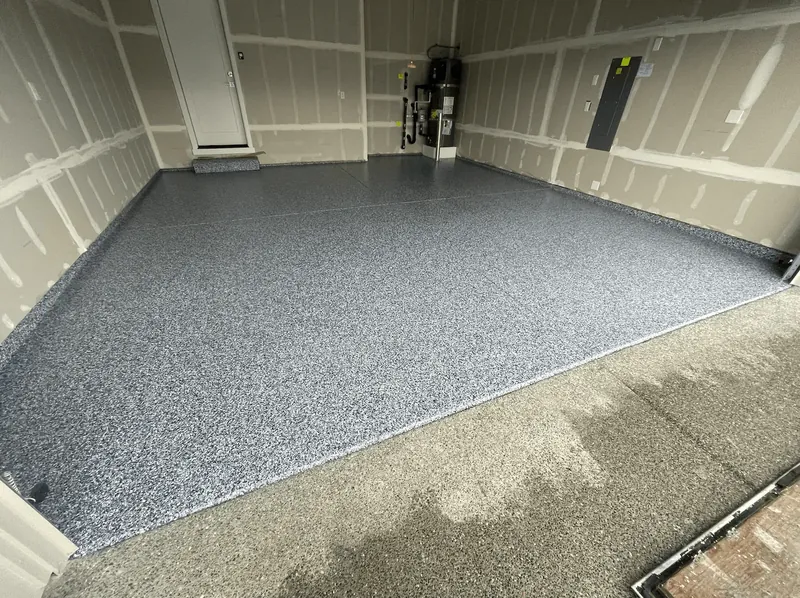
Key takeaways
- Ohio has no state license for flooring or coating contractors; the state licenses five commercial trades, and city building departments may register or license contractors.
- Hands-on epoxy classes run in Columbus, Lima, Cincinnati and Bowling Green, from two days at $499–849.99 to a three-day intro at Epoxy Depot.
- Ohio caps floor coatings at 100 grams of VOC per liter for products made since January 1, 2024, a quarter of the national limit.
- Workers' comp in Ohio comes from the state: from the first employee you buy coverage through the Bureau of Workers' Compensation unless you qualify to self-insure.
- Normal daily highs stay below 50°F from December through February in Columbus, Cleveland and Cincinnati, so plan unheated garage work for April through October.
Ohio is a low-paperwork state for a coating business and a short-season one. There is no state license for floor coatings, an LLC costs $99 with no annual report, and four providers run hands-on classes inside the state. The constraints are the winter, which closes most unheated garages for three months, and a VOC limit on floor coatings that is a quarter of the national one.
Do you need a license for epoxy floors in Ohio?
Not from the state. The Ohio Construction Industry Licensing Board licenses only commercial contractors in five trades: electrical, HVAC, refrigeration, plumbing and hydronics. Residential contractors are not licensed by the state at all, and floor coating isn’t one of the licensed trades for commercial work either.
That leaves the cities. Ohio’s building departments can run their own contractor registration or licensing, and requirements differ from one city to the next. And with no state license to revoke, an unhappy homeowner goes to the Ohio Attorney General’s Consumer Protection Section or the local building department, so a written contract, dated photos and a clear warranty are your protection. Before you quote in a new city, call its building department and ask two questions: do you register contractors, and does this job need a permit? If a job includes electrical, plumbing or HVAC work, that part needs the right licensed contractor; you can check a license through the Ohio Construction Industry Licensing Board.
VOC limits: Ohio’s own rule
Ohio is one of the states with its own limits on the solvent content of architectural coatings, and they reach the people who apply coatings, not just the people who sell them. For products made on or after January 1, 2024, floor coatings are capped at 100 grams of VOC per liter, down from 250 g/L, and industrial maintenance coatings at 250 g/L, down from 340 g/L. The national limit for floor coatings is 400 g/L, so a product legal in a neighboring state can be over the limit on an Ohio job.
What that means in practice:
- Read the VOC figure on the data sheet and the label before you stock a system. The Ohio rule defines floor coatings to include “decks, porches, steps, garage floors.”
- Don’t thin a coating past its limit on site; the rule forbids it.
- Containers of one liter or less are exempt, so touch-up kits are not the problem; the five-gallon kits are.
- Older stock can still turn up. A coating made before January 1, 2024 that met the old 250 g/L limit could be sold for up to three years after that date, so check the date code on anything that has sat on a shelf.
Setting up the business: LLC, workers’ comp and safety
Forming an LLC costs $99 with the Ohio Secretary of State (Form 610). Ohio has no annual report for LLCs, which makes it one of the cheapest states to keep an LLC in good standing.
Workers’ compensation works differently in Ohio than in almost every other state. Ohio runs its own state fund, and any employer with one or more employees must get coverage from the Ohio Bureau of Workers’ Compensation or be approved to self-insure. Private insurers can’t sell basic Ohio workers’ comp, so your agent quotes general liability and the state quotes comp. Budget for it from the first hire.
Safety rules are federal in Ohio. There is no state OSHA plan for private employers, so federal OSHA enforces the silica standard that applies when you grind concrete. A grinder connected to a dust extractor built for silica dust is the normal way to meet it.
Where to take an epoxy class in Ohio
Four providers hold hands-on classes in Ohio:
| Class | Where | Length | Price | Price per day |
|---|---|---|---|---|
| Deco-Crete Supply intro | Columbus | 2 days | $849.99 ($749.99 early-bird) | about $425 ($849.99 ÷ 2) |
| ResinForce | Cincinnati | 2 days | $500 ($400 each for 2+) | $250 |
| The Concrete Protector | Lima | 2 days | $499 deposit, returned as store credit | — |
| Epoxy Depot Intro to Epoxy | Bowling Green | 3 days | Ask the store | — |
The classes differ in what they emphasize. Deco-Crete’s intro covers metallic epoxy, broadcast floors and dyes and stains. ResinForce works through prep, metallic, flake, quartz and grind-and-seal systems. The Concrete Protector’s class is built around its decorative coatings, and the deposit comes back as store credit, so the class (for you and a guest) is free if you buy its products. Epoxy Depot’s three-day intro runs in Bowling Green, south of Toledo, with dates in November and December.
Indianapolis is on ResinForce’s travelling schedule, and Epoxy Depot’s academy in Lebanon, Pennsylvania, holds its intro class every month.
Cold winters and humid summers: installing in Ohio
A typical high-solids floor epoxy, such as Sherwin-Williams ArmorSeal 1000 HS, needs air, slab and material between 50°F and 120°F, relative humidity no higher than 85%, and a slab at least 5°F warmer than the dew point. Ohio’s numbers:
| City | Normal January high | Normal January low | Average humidity at 7 a.m. | Average humidity at 1 p.m. |
|---|---|---|---|---|
| Columbus | 37.1°F | 22.0°F | 75–86% | 52–68% |
| Cleveland | 35.8°F | 22.3°F | 75–83% | 56–70% |
| Cincinnati | 39.6°F | 23.1°F | 75–87% | 53–68% |
| Toledo | 34.7°F | 20.3°F | 78–89% | 52–72% |
Humidity ranges are the lowest and highest monthly averages across the year.
- Plan the season. Normal daily highs in Columbus, Cleveland, Cincinnati and Toledo stay below 50°F from December through February, and in Cleveland and Toledo through March. Unheated garages are realistic from about April through October.
- Cold slows the cure. The ArmorSeal epoxy takes foot traffic after 48 hours at 50°F instead of 24 at 77°F, and fully cures in 10 days instead of 7. Quote the longer times for spring and fall jobs.
- Winter work needs heat or a cold-rated product. A heated garage can be coated if the slab itself is warm enough. Some polyaspartics are rated for lower temperatures; Deco-Crete’s Polyaspartic 90 lists a 40°F minimum surface temperature, although it works best between 60°F and 90°F.
- Late-summer mornings are humid. Average 7 a.m. humidity in Columbus and Cincinnati reaches 85–87% in August and September, and 89% in Toledo, so coat after the morning, not at dawn.
- Prep for road salt. Garage floors in Ohio take tire-borne salt and slush every winter, so prep and the top coat matter as much as the color. Test every slab for moisture by calcium chloride test (ASTM F1869) or in-slab humidity (ASTM F2170) before you coat.
Where the work is in Ohio
Ohio had 11,900,510 residents on July 1, 2025, the seventh-largest state, and added 39,889 people that year. More people moved into Ohio from other states than left it (11,926 net in 2025, after a net loss of 32,482 in 2021), a turnaround worth watching for a business that depends on homeowners. Ohio’s population is spread across three large metros, Columbus, Cleveland and Cincinnati, and the classes are spread out the same way.
Epoxy Business School classes in Ohio
Epoxy Business School hasn’t scheduled an Ohio class yet. Classes open state by state with partner trainers who install floors for a living, in the states where enough people ask for them. Before the two days on the slab, students complete The Epoxy Playbook: recorded installation training, with full installs you can replay, plus the business side of pricing, quoting and selling. It’s required before the hands-on class.
If you’re in Ohio, leave your number below and we’ll text you when a class is set. If you work across state lines, Pennsylvania, Michigan and Indiana each set different rules; see license requirements by state.
Classes in and near Ohio
Listed so you can compare; not an endorsement or a partnership. Confirm dates and prices with the provider before you book.
| Provider | Where | Format | Price | Notes |
|---|---|---|---|---|
| Deco-Crete Supply | Columbus | 2 days | $849.99 ($100 off early-bird) | Metallic epoxy, broadcast floors, acetone dyes and solid-color stains; October 22–23, 2026; 10% product discount during class. |
| The Concrete Protector | Lima | 2 days | $499 deposit, returned as store credit | Decorative coatings, grinders, sales and bidding. Dates: October 14–15 and December 9–10, 2026; January 13–14, 2027. |
| ResinForce (CleanPro Supply) | Cincinnati | 2 days | $500 ($400 each for 2 or more) | November 12–13, 2026. Prep, metallic, flake, quartz and grind-and-seal systems; meals included. |
| Epoxy Depot | Bowling Green | 3 days (Intro to Epoxy) | Ask the store | November 18–20 and December 9–11, 2026. Prep, crack filling, flake, solid color and metallic. |
| ResinForce (CleanPro Supply) | Indianapolis, IN | 2 days | $500 ($400 each for 2 or more) | Same travelling class as Cincinnati. |
| Epoxy Depot | Lebanon, PA | 3 days (Intro to Epoxy) | Ask the store | Epoxy Depot Academy: November 5–7 and December 3–5, 2026; January 7–9, 2027. |
Questions
Do I need a license to install epoxy floors in Ohio?
Not from the state. Ohio licenses only commercial electrical, HVAC, refrigeration, plumbing and hydronics contractors, and residential contractors are not state-licensed. City building departments can require their own registration or license, so check with each city before you quote.
Where can I take an epoxy flooring class in Ohio?
Columbus (Deco-Crete Supply, two days for $849.99), Lima (The Concrete Protector, a $499 deposit returned as store credit), Cincinnati (ResinForce, two days for $500) and Bowling Green (Epoxy Depot, three days). The table on this page has the dates.
How much does it cost to set up an LLC in Ohio?
$99 to file the articles of organization with the Secretary of State. Ohio has no annual report for LLCs, so there is no yearly state filing fee to keep the LLC active.
How does workers' comp work in Ohio?
Ohio runs its own workers' comp fund. Any employer with one or more employees must get coverage from the Ohio Bureau of Workers' Compensation or be approved to self-insure; private insurers can't sell you basic Ohio coverage.
Can I coat a garage floor in an Ohio winter?
Only if you can keep the slab and the air inside the data-sheet range. Normal daily highs in Columbus, Cleveland and Cincinnati stay below 50°F from December through February, the minimum for many epoxies. A heated garage or a cold-rated polyaspartic can work, with longer cure times.
Keep reading
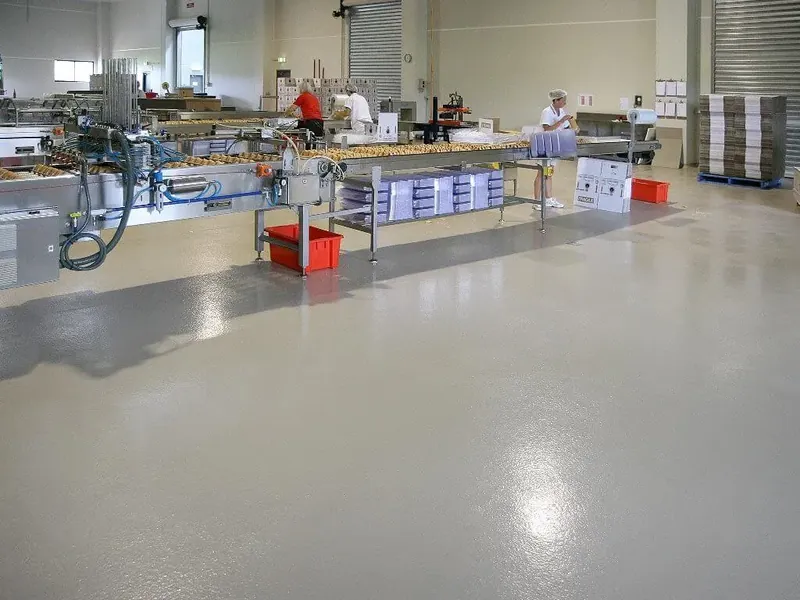
License requirements by state
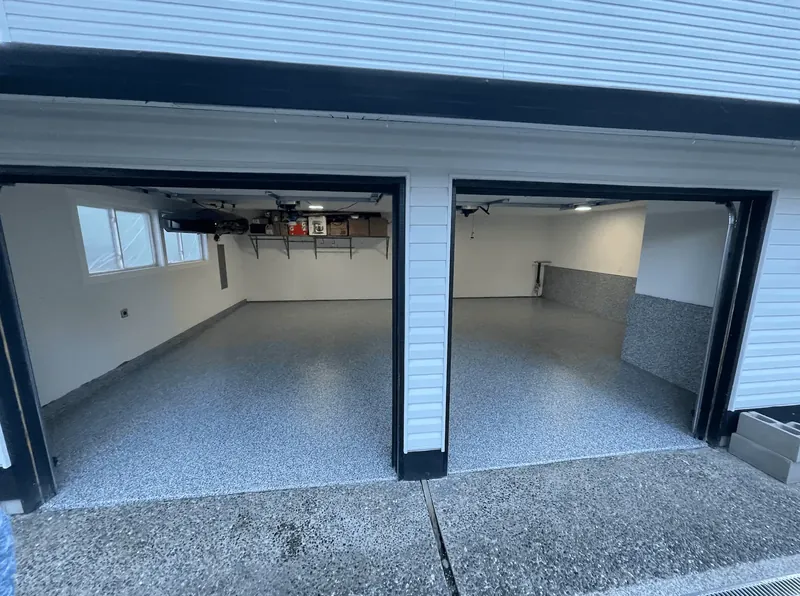
Classes by state
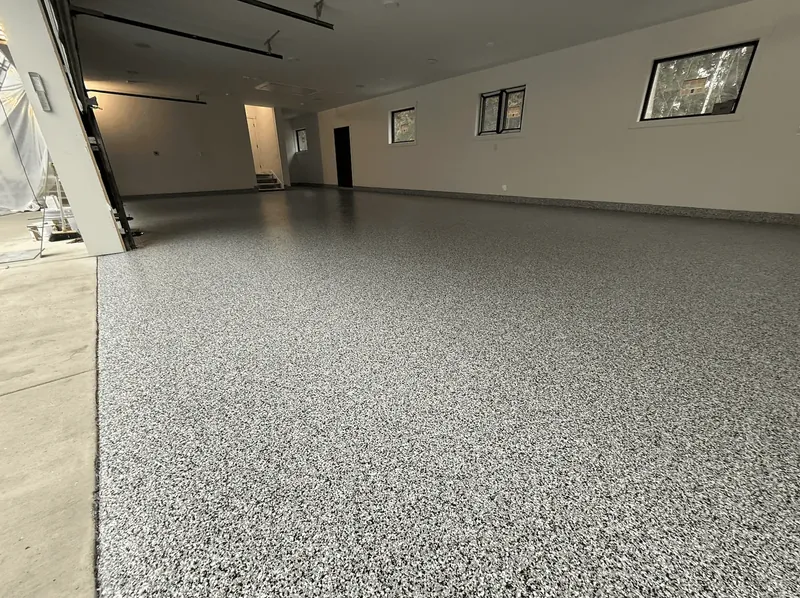
How to start an epoxy flooring business
Start an epoxy flooring business step by step: training, LLC, insurance, equipment to rent or buy, pricing and first jobs, with published prices.
Epoxy cure time: how temperature, humidity and dew point change it
Epoxy and polyaspartic cure times from real data sheets: pot life, recoat windows, foot and vehicle traffic, the 5°F dew point rule, and cold-weather planning.