Epoxy flooring training
What a complete class covers, and the US classes running today.
Credentials
No single license or certification is required to install epoxy floors nationwide. Manufacturers certify installers on their own products, often as part of a dealer program, industry bodies offer credentials for coatings and concrete repair, and some states require a contractor license for flooring work.
What exists
Four different things go by that name. Only one of them comes from the state, and only one decides whether a manufacturer stands behind the floor.
Many hands-on epoxy classes end with one, from the supplier, manufacturer or school that ran the class. It documents the training you took. It isn’t a license, and it doesn’t make you an approved installer for any coating brand.
Coating manufacturers train and certify installers on their own systems, through a distributor class or a dealer program. Penntek dealers, for example, complete a two-day hands-on certified installation class, and the eligible systems they install carry a limited lifetime manufacturer’s warranty. A manufacturer may add every firm that finishes its class to its list of applicators. And Stonhard, a commercial flooring manufacturer, installs its own systems, so one company answers for both the product and the work.
AMPP, the coatings association formed from NACE International and SSPC in 2021, certifies people who apply and inspect coatings on concrete, and accredits contracting companies. ICRI, the International Concrete Repair Institute, certifies slab moisture testing and concrete surface repair technicians.
Licenses come from states, not from the trade. Some states license flooring or coating work, often above a dollar threshold per job; in others, only local licenses and business registration apply. Every state is summarized in license requirements by state.
Industry credentials
None of these is needed to coat a garage. They count on commercial, institutional and industrial work, where specifications can name them.
| Credential | Issued by | Who it’s for | What it takes |
|---|---|---|---|
| QP 8 accreditation, polymer coatings on concrete | AMPP | Contracting companies that install polymer coatings and surfacings on concrete in commercial, institutional and industrial buildings | Written submittals on management, quality control, personnel and safety, then an audit at an active jobsite |
| Concrete Coating Applicator Specialist (CCAS) | AMPP | Craft workers who apply coatings to concrete | A four-day hands-on course in concrete repair, surface prep and application, a written exam, then a hands-on certification exam |
| Concrete Coating Inspector (CCI), Levels 1 and 2 | AMPP | People who inspect surface prep and coating work on concrete | Level 1: a course with a practical exam and a written exam; Level 2 adds field experience requirements |
| Concrete Slab Moisture Testing Technician, Grade 1 (CSMT) | ICRI | Anyone who runs slab moisture tests | An education session, a written exam and five ASTM tests performed in front of a judge, including calcium chloride (F1869) and in-slab RH (F2170); valid five years |
| Concrete Surface Repair Technician, Grade 1 (CSRT) | ICRI | Quality control and inspection on concrete repair | Online modules, a knowledge exam and a performance exam; valid five years |
Moisture decides whether a coating stays down, and a growing number of project and manufacturer specifications ask for an ICRI-certified technician to run the tests. The tests themselves are in concrete moisture testing.
Owners of commercial and industrial buildings use QP 8 to screen the firms that bid on coating their concrete. It audits how a company works, its procedures and its practices on a live job, rather than inspecting the floors it installs.
Who checks what
A class certificate isn’t on either list. It helps a homeowner see that you trained for the work, but on a commercial job it doesn’t stand in for the manufacturer’s approval. Plan your credentials around the jobs you want.
A practical order
From the moisture test to the top coat, then practice it. Many classes end with a certificate of completion: your training record.
Take the manufacturer’s or distributor’s training for the product lines you’ll install. That’s the certification warranties and specifications look for.
Check your state’s rule before you quote, and carry general liability before the first job. Licensing by state.
ICRI moisture testing certification for spec jobs; AMPP’s concrete coating courses, and QP 8 for the company, when owners ask for them.
Epoxy Business School
When you complete an Epoxy Business School hands-on class, you receive a certificate of completion from the school. The training behind it comes in two steps: The Epoxy Playbook first, recorded hands-on installation training with full installations you can replay, required before class; then two days on real slabs with a partner trainer, following the two-day class standard.
Owner: the exact certificate wording: its title, what it lists (class dates, hours on the slab, systems installed, trainer) and how a customer can verify it.
Next steps
What a complete class covers, and the US classes running today.
Every hands-on class we list, state by state, with prices and licensing rules.
The board, the classification for coatings and the dollar thresholds in every state.
Training, costs, territories and warranties in the main coating dealer programs.
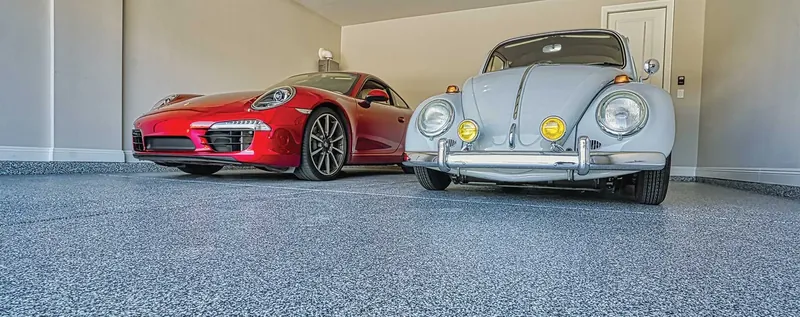
What a good class on flake and polyaspartic garage systems covers.
Why metallic floors are learned hands-on, and the classes that teach them.
Questions
No single license or certification is required to install epoxy floors nationwide. Manufacturers certify installers on their own products, often as part of a dealer program, industry bodies offer credentials for coatings and concrete repair, and some states require a contractor license for flooring work. Check with your state's contractor licensing board.
Yes. When you complete a hands-on class you receive a certificate of completion from Epoxy Business School. It shows you finished the class; it isn’t a contractor license or a manufacturer certification. What certification means in this trade.
Get trained by the manufacturer of the systems you install, usually through its distributor or dealer program. That’s the certification warranties and commercial specifications look for. A class certificate documents your training, and AMPP and ICRI credentials add weight when you bid commercial work.
No. Both are voluntary. Some commercial and industrial specifications ask for them, such as an AMPP QP 8 accredited contractor for polymer coatings on concrete, or an ICRI-certified technician for slab moisture testing.
Often. Penntek, for example, backs eligible systems installed by its certified dealers with a limited lifetime manufacturer’s warranty, and commercial specifications commonly require the manufacturer’s written approval of the installer. Read a product line’s warranty terms before you build your business on it.
It depends on the state, and sometimes on the size of the job. Check your state's contractor licensing board before you quote your first floor. Our license requirements by state page summarizes each state.
Start with the class finder: every hands-on class we list, state by state, with its length and price. Many end with a certificate of completion. Epoxy Business School classes open state by state; join the waitlist and we’ll text you when one opens near you.
The Epoxy Playbook: full installations recorded start to finish, which you can replay as often as you need, plus pricing, quoting and selling the job.