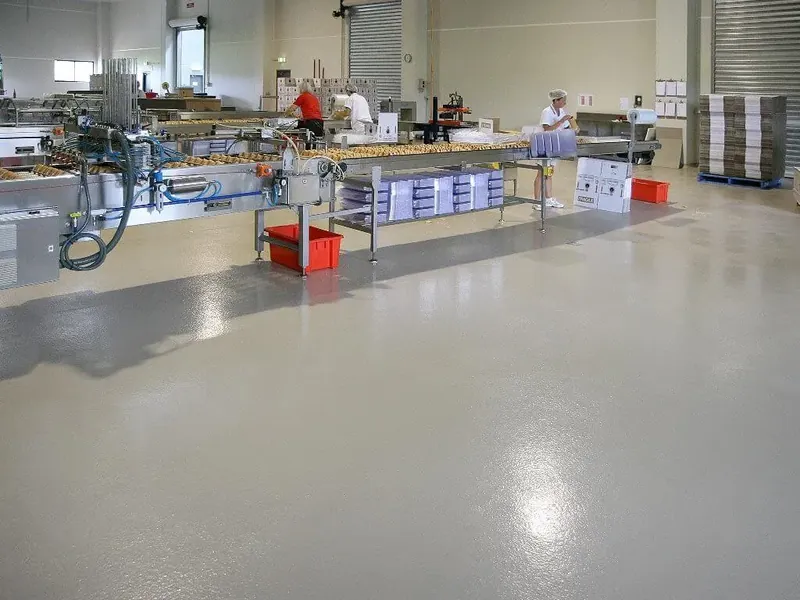
Key takeaways
- Find out what's on the slab before you price it: ask, then check with water drops, a xylene spot test and a putty knife at a chipped edge.
- Recoat only over a sound, well-bonded two-part epoxy or urethane, with all of the gloss abraded and a test patch passed. Peeling, unknown, one-part and acrylic coatings come off.
- Match the method to the coating: metal-bond diamonds or a shot blaster for thin films, PCD tooling for most epoxy floors, a scarifier for very thick or rubbery coatings.
- Treat old vinyl or asphalt flooring and its mastic as asbestos until tested, and painted floors in pre-1978 homes as possible lead paint; neither gets ground without the right testing and certification.
- Price removal per square foot from a timed test area, your tooling wear and disposal, then add the extra day and the repairs the bare slab will need.
Removing an old floor coating starts with knowing what it is. Identify the coating and check how well it’s bonded, then decide whether it can be recoated or has to come off. If it comes off, match the method to the coating: metal-bond diamonds or a shot blaster for thin films, PCD tooling on a floor grinder for most epoxy floors, and a scarifier for very thick or rubbery systems. Price it from a timed test area, never a guess.
Here’s how to read the floor, make the recoat call, choose a method, handle the dust and hidden hazards, dispose of the waste, and build removal into the price and schedule.
Find out what’s on the slab
Start by asking. The owner, a previous contractor, leftover cans or a receipt can save you a lot of testing. Then check the floor yourself:
- Water drops. On bare concrete, water soaks in and darkens the surface within a minute or so. If it beads or sits, there’s a sealer, densifier or coating on the slab.
- Xylene spot test. Leave a few drops of xylene on the coating for 20–30 seconds, wipe it and touch it. A solvent-based acrylic sealer turns tacky. Cured epoxy and urethane stay hard.
- A chipped edge. Look at it closely: a thin paint film, a sealer you can barely see, or a thick system with layers, flake or quartz in it. The thickness decides the removal method.
- Bond checks. Push a putty knife under edges and chips in several places. Cut an X through the coating with a utility knife, press duct tape over it and rip it off. Tap with a hammer, or drag a chain, and listen for hollow spots. On commercial jobs, a pull-off adhesion test puts a number on it.
- Moisture signs. Blisters that weep, white powder under lifted coating or dark, damp concrete beneath a peeled patch mean moisture pushed the coating off. Removing it won’t fix that; see concrete moisture testing.
| What you find | Likely coating | Usual call |
|---|---|---|
| Thin, glossy film that turns tacky under xylene | Solvent-based acrylic sealer | Remove; coatings don’t bond to it |
| Thin paint, peeling in the tire paths | One-part floor paint, including one-part “epoxy” paints | Remove |
| Hard, thick, unaffected by xylene, tight at the edges | Two-part epoxy or urethane system | Possibly recoat, after testing |
| Flake or quartz under a clear topcoat | A broadcast system | Recoat if it’s bonded everywhere; remove if it’s peeling |
| A rubbery, flexible layer | Polyurea or elastomeric membrane | Remove, usually with a scarifier |
| Tile, sheet flooring or black adhesive | Resilient flooring and mastic | Test for asbestos before you touch it |
Recoat or remove?
A new coating is only as good as the one under it. You can recoat when all of these are true:
- The old coating is a two-part epoxy or urethane, not a paint or sealer.
- It's tightly bonded everywhere you check, with no peeling, blisters or hollow spots.
- The slab has no moisture problem, and none is suspected.
- The new system's data sheet allows application over an existing coating.
- A test patch of the new primer or coat, cured and then checked with the X-cut tape test, holds.
To recoat, abrade every square inch until no gloss is left, using a sanding screen or fine diamonds, then vacuum and clean as the data sheet says. Grind chipped or peeling spots back to where the coating is tight, and patch them flush. Gloss you miss is where the new coat will peel.
Remove instead when the coating is peeling, blistered, unknown, a one-part paint or an acrylic sealer, or soaked with oil, or when the floor needs a moisture barrier, which has to go on bare concrete. Some systems are only warranted over bare concrete, so check before you promise a recoat.
Removal methods
| Method | Best for | What it leaves | Watch for |
|---|---|---|---|
| Metal-bond diamonds | Sealers, paint and thin coatings | An even scratch profile | Thick or soft coatings gum up and glaze the diamonds |
| PCD with a wear bar | Coatings, mastic and glue up to about 30 mils | A moderate profile | PCDs cut in one direction only |
| PCD without a wear bar | Thicker epoxy and urethane systems | A coarse, gouged surface | Grind with metal bonds afterward |
| Shot blasting | Thin, hard coatings and paint | An open, even profile | Shot bounces off soft and rubbery coatings |
| Scarifying | Very thick coatings (1/8 inch and up) and elastomerics | A rough, grooved surface | Needs grinding or a resurfacer after |
| Walk-behind or ride-on scraper | Peeling coatings and loose material | Bonded residue | A fast first pass; grind after |
| Chemical stripper | Paint and acrylic sealers in small areas | Residue to clean off | Slow on cured epoxy; follow the SDS |
PCDs are directional. On a machine with counter-rotating heads, run half left-hand and half right-hand tools so the machine stays balanced; the grinder’s manual shows which goes where. After PCDs, grind with metal bonds to the profile the new system calls for; diamond tooling for concrete grinding covers the tooling and concrete grinders for epoxy prep covers the machines. A scarifier or shot blaster is usually rented for the occasional job that needs one; concrete grinder rental covers renting.
Edges and corners are where removal jobs run long. Plan for a hand grinder with a PCD cup or a scraper along every wall.
Dust and hidden hazards
Removing a coating also grinds concrete, so the silica rules apply. Floor grinders and walk-behind milling machines (scarifiers) need the dust collector the manufacturer recommends, with a filter of 99% efficiency or better and a filter-cleaning mechanism, plus a HEPA vacuum between passes indoors. Hand grinders need a shroud and at least 25 cfm of airflow per inch of wheel diameter. Tasks that aren’t on the silica rule’s table, like shot blasting, need an exposure assessment instead. Dust extractors and silica rules covers the details.
Two hazards can stop the job outright:
Asbestos. Asphalt and vinyl flooring installed by 1980 is treated as asbestos-containing until a lab test proves otherwise, and so are resilient flooring’s mastic and backing. That includes the black adhesive often left on the slab after tile is pulled up. Don’t sand, grind or dry-scrape it, and don’t dry-sweep the debris. Have it sampled and tested first; if it’s positive, removal is regulated asbestos work, and many states require a licensed abatement contractor.
Lead. Paint on floors in homes built before 1978, and in child-occupied facilities, can contain lead. Disturbing it falls under the EPA lead renovation rule, or the state program that replaces it, unless the paint tests lead-free: the firm and the renovator need certification, grinders need a shroud with a HEPA vacuum attachment, and open-flame removal is banned.
Chemical strippers bring their own risks. Methylene chloride strippers can’t be sold to consumers, are covered by OSHA’s own exposure standard at work, and saw the federal rules on commercial use change again in 2026. Check the current EPA, OSHA and state rules before you use one, or choose a different stripper or a mechanical method. Whatever you use, read the SDS, ventilate and wear what it calls for; epoxy flooring safety covers protective equipment.
Disposal
- Dust and chips. Collect them in the extractor’s bags and seal them. Cured coating and concrete dust usually go out with ordinary construction waste where local rules allow; asbestos and lead waste follow their own disposal rules.
- Stripper sludge and solvent rags. Never into a drain, a storm sewer or the soil. Collect them, follow Section 13 of the SDS and your local hazardous waste rules, and keep solvent rags in a closed metal can.
- Leftover resin. Mix small amounts of leftover A and B and let them cure before disposal, spread thin rather than in a bucket, because a mass of mixing resin can overheat (exotherm).
How removal changes price and schedule
Removal is priced per square foot on its own line, built from your numbers rather than a guess:
- Time a test area. Remove 25–50 sq ft with the tooling you’d use and time it. That gives you a removal rate in square feet per hour.
- Work out the hours. Divide the floor area by the rate, then add edge work and cleanup.
- Add tooling wear. PCDs and metal bonds wear faster on coatings than on bare concrete. Track it per square foot on your own jobs.
- Add disposal. Bags, haul-away or dumpster fees, and any special handling.
- Allow for what’s underneath. Bare concrete after removal often needs more patching, a heavier primer coat on the rougher profile, or a moisture barrier.
Say a 50 sq ft test area takes 25 minutes with PCDs: that’s 120 sq ft an hour. A 600 sq ft garage is then about 5 hours of machine time before edges, cleanup and the normal prep grind. On most jobs that’s an extra day.
Moisture tests need bare concrete, so grind test spots clear or schedule the test after removal. Write a change-order clause into the scope of work for conditions found once the coating is off, such as moisture, hidden damage or suspect mastic. Then run the numbers through the job pricing calculator and put removal on its own line in the estimate template. Spotting old coatings on the first visit is covered in how to measure a floor for an epoxy estimate, and repairing the bare slab in crack and joint repair before coating.
Learning the prep
Removal and prep decide whether the next floor lasts; why epoxy floors fail shows what happens when they’re skipped. The Epoxy Playbook is recorded hands-on installation training, full installations you can replay as often as you need, plus the business side, and it’s required before the hands-on class. If you’re still setting up the business, start with how to start an epoxy flooring business.
Questions
Can you put epoxy over an existing epoxy floor?
Sometimes. If the old floor is a well-bonded two-part epoxy or urethane with no peeling, blisters or moisture problems, you can abrade all of the gloss, clean it and recoat once a test patch passes. Peeling, unknown, one-part or acrylic coatings have to come off first.
What is the best way to remove epoxy from a concrete floor?
Mechanical removal. Most epoxy floors come off fastest with PCD tooling on a floor grinder, followed by metal-bond diamonds to even out the profile. Thin coatings come off with metal bonds or a shot blaster, and very thick or rubbery coatings call for a scarifier. Chemical strippers are slow on cured epoxy.
How do I know what coating is on my floor?
Ask the owner and look for leftover cans or paperwork, then test. Water beads on sealed or coated concrete. A few drops of xylene make a solvent-based acrylic sealer tacky in 20–30 seconds, while cured epoxy and urethane stay hard. A chipped edge shows how thick the coating is and how well it's bonded.
Can an old floor contain asbestos?
Old vinyl and asphalt floor tile, sheet flooring and the black mastic under them can. Treat asphalt or vinyl flooring installed by 1980, along with its mastic and backing, as asbestos-containing until a lab test says otherwise, and don't grind, sand or dry-scrape it.
How much does it cost to remove an epoxy floor?
It depends on the coating's thickness and bond, the removal method, tooling wear, disposal and the repairs the bare slab needs afterward. Price it per square foot from a timed test area and your own labor and tooling costs, and add the extra visit or day to the schedule.
Keep reading
Diamond tooling for concrete grinding: bonds, grits and PCDs for coating prep
Concrete grinding tools explained: metal-bond diamonds and grits for coating prep, matching bond to concrete hardness, PCDs, resin bonds, cup wheels and costs.
Concrete dust extractors and OSHA's silica rules for grinding floors
What OSHA's silica rule requires when you grind concrete: the 50 µg/m³ limit, Table 1 controls for floor and hand grinders, written plans and extractor specs.
Crack and joint repair before you coat a concrete floor
How to repair cracks and joints before an epoxy coating: read each crack, chase and fill it, fill or honor control joints, patch spalls and know what no coating fixes.
Concrete grinder rental: what to rent, what it costs, how to use it
Concrete grinder rental rates for hand-held, dual-disc and planetary grinders, what's charged extra, power and OSHA dust rules, and a garage step by step.