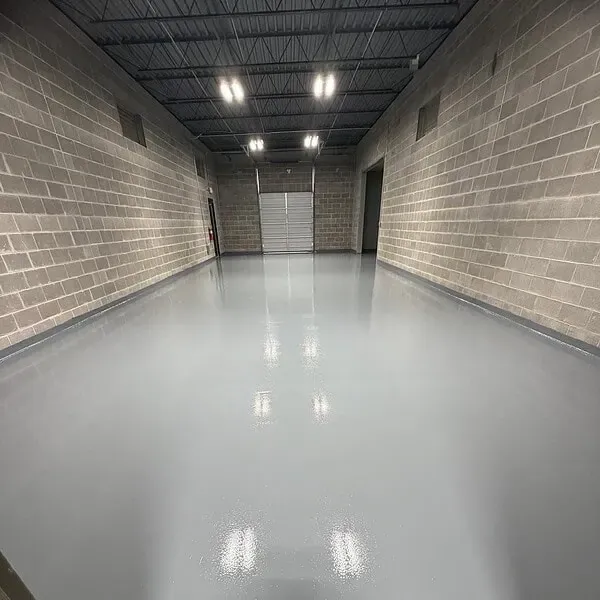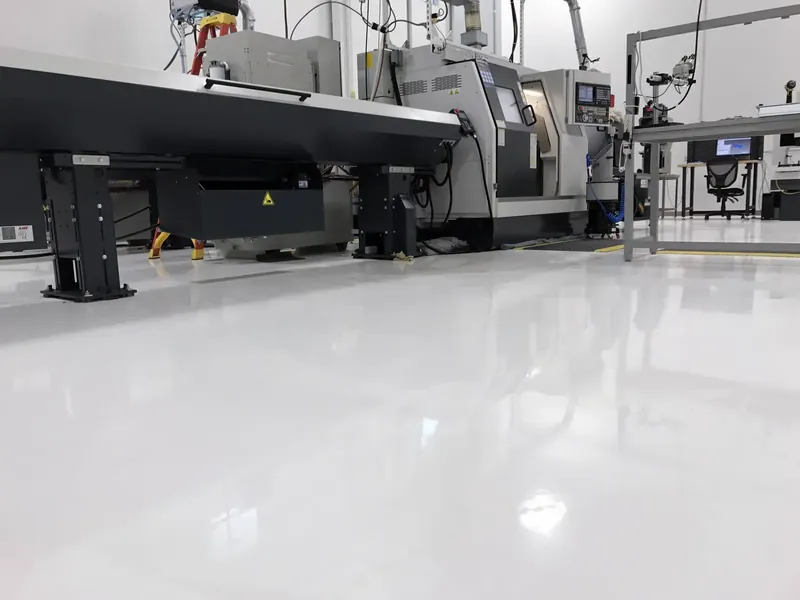
Key takeaways
- Read the whole spec before you price. The resinous flooring section sets the system, tests, mockup and warranty; the general requirements set the paperwork, payment and closeout.
- Submittals usually include data sheets, SDS, samples on a rigid backing, the manufacturer's letter approving you as installer, a list of similar projects and maintenance data. The time they take belongs in the price.
- Federally funded construction over $2,000 pays Davis-Bacon prevailing wages, subcontractors included, with weekly certified payrolls; many states have prevailing wage laws for their own public work.
- Federal construction contracts over $150,000 need performance and payment bonds, public bids often need a bid bond, and general contractors commonly ask for $1 million per occurrence and $2 million aggregate liability with additional insured endorsements.
- Price commercial work from your production rates, mobilizations, off-hours premiums, testing, mockups, bonds, insurance and the cash held back as retainage, not from a garage price per square foot.
Bidding a commercial epoxy floor means pricing to a written specification instead of a homeowner’s wish list. Read the resinous flooring section and the general requirements, list every submittal, test and mockup they ask for, check for prevailing wage, bonds and insurance requirements, plan the phases around the building’s operations, then build the price from your own production rates. Commercial work rewards the contractor who reads all of the paperwork.
This guide assumes you can already install the system. If you’re still pricing garages, start with how to price epoxy flooring.
How a commercial bid comes together
Most commercial floors reach you through a general contractor, a public agency’s bid portal or a facility manager. The bid documents are the drawings (the finish schedule shows which floor system goes where, often by a tag like RES-1), the project manual with the specifications, a bid form and any addenda. There may be a pre-bid meeting or site walk.
- Get the full set. Drawings, every specification section that touches your work, and all addenda. An addendum you missed can change the system.
- Walk the site if it exists. How to measure a floor for an epoxy estimate covers what to record.
- Ask questions in writing before the deadline for requests for information. Answers come back as addenda, and they bind every bidder.
- Price it, including the alternates and unit prices the bid form asks for.
- Submit on time on the required form. Subcontractor bids to general contractors are usually due hours before the general’s own deadline, and late bids are thrown out.
Read the spec before you price
Resinous floors usually sit in section 09 67 23, resinous flooring; quartz systems sometimes get their own section, 09 67 26, quartz flooring. Division 01 sets the general rules: submittal procedures, substitutions, payment, closeout and warranties. Concrete sections matter too, because a curing compound or a sealer in the concrete spec becomes your removal problem.
Pull these out of the flooring section before you price anything:
- The system: the basis-of-design product, thickness, texture, finish and whether substitutions are allowed, and how to request one.
- Cove base height, radius and termination, and joint treatment.
- Moisture testing: how many tests (one per 1,000 sq ft, at least three per area is common), the limits, and who pays for mitigation if a test fails.
- Surface preparation. If the spec still calls for acid etching and the manufacturer requires mechanical prep, ask in writing.
- Installer qualifications: manufacturer approval, years of experience, number of similar projects.
- Mockups: size (anything from 16 sq ft to an 8 by 8 ft area or more), location, lighting, and whether the mockup can stay as part of the floor.
- Field quality control: thickness checks or cores, adhesion tests, slip-resistance testing.
- Environmental limits, lighting during application, and how long the area stays closed afterward.
- Warranty length and who gives it, the manufacturer, the installer or both.
- VOC and emissions limits, and any green-building paperwork.
Submittals and qualifications
Before you order material, you send submittals for approval: product data sheets and SDS for every product, color charts, then verification samples (often 6 or 12 inches square on a rigid backing, made by you), the manufacturer’s letter certifying you as an approved installer, a list of similar projects, warranty forms and, at closeout, maintenance data. Rejected submittals come back for resubmission, which costs days.
Installer qualifications decide whether you can bid at all. Specs commonly ask for written approval from the manufacturer, three to five years on similar systems and a list of comparable projects; some ask for ten. Get approved by the manufacturers whose systems show up in your local specs before you chase the bids. A quartz broadcast floor with an integral cove base is a common commercial spec and a good place to build references.
All of this is unpaid office time and sample material. Count it.
Prevailing wage and certified payroll
Construction that is federally funded or assisted and over $2,000, painting and decorating included, falls under the Davis-Bacon and Related Acts. Contractors and subcontractors must pay at least the wages and fringe benefits in the wage determination attached to the contract, file certified payrolls every week with a signed statement of compliance, and keep the records for three years after the job. The prime contractor answers for its subcontractors’ compliance, so expect to be checked.
Many states have their own prevailing wage laws for state and local public work, with their own thresholds and rates. Ask which work classification covers resinous flooring on the project; it isn’t always obvious, and the rates differ. Then use the prevailing rate plus fringe as your labor rate in the price.
Bonds, insurance and getting paid
- Bid bonds. Public bids commonly require a bid bond, often 5–10% of the bid on state and local work and at least 20% (capped at $3 million) on federal bids. It guarantees you’ll sign the contract and provide the other bonds if you win.
- Performance and payment bonds. Federal construction contracts over $150,000 require both, each for the full contract amount, and states have similar laws for their own work. General contractors sometimes require them from subcontractors. Premiums commonly run about 1–3% of the contract, higher for small and new contractors. Line up a surety agent early; approval takes financial statements and a track record.
- Your protection on public jobs. You usually can’t put a lien on public property, so the prime contractor’s payment bond is your security. On a federal job, if your contract is with a subcontractor rather than the prime, you must give the prime written notice within 90 days of your last day of work to claim on the bond, and sue within a year. State deadlines differ.
- Insurance. General contractors commonly require $1 million per occurrence and $2 million aggregate in general liability, a completed-operations aggregate, auto and workers’ compensation, often an umbrella, and endorsements: additional insured for ongoing and completed operations, primary and non-contributory, and a waiver of subrogation. A certificate alone doesn’t do it; the endorsements have to be on the policy. Epoxy flooring business insurance covers the policies.
- Payment terms. Expect a schedule of values, monthly pay applications, payment 30–60 days later or when the general contractor gets paid, and retainage of 5–10% held until completion. Many states cap retainage on public work.
Scheduling around operations
Commercial floors are rarely empty. A restaurant, a clinic or a plant has to keep running, so the work gets split into phases, often at night or over weekends, and every phase is its own setup, protection, cure and cleanup. On new construction, you’re coordinating with the other trades, and the HVAC usually has to run before moisture tests and installation.
Plan for:
- Dust containment with plastic barriers and HEPA extraction, and odor control in occupied buildings.
- Cure time before each area goes back into service; faster-curing systems shorten the closure but change the price.
- Access: loading docks, elevators, badges, parking and site safety orientations.
- Protection of the finished floor while other trades finish, if the spec makes it your job.
Pricing a large floor
Large open floors grind and coat faster per square foot than a garage, but commercial jobs carry costs a garage never sees. Price the field area from your measured production rates, price the detail work (edges, columns, drains, cove, transitions) separately, then add:
| Commercial cost | What drives it | How to price it |
|---|---|---|
| Submittals and samples | Office hours, sample boards | Hours × rate, plus materials |
| Mockup | Size and system in the spec | Like a small job: material plus a crew day |
| Testing | Number of moisture tests, cores, adhesion tests | Per test, from your kit or lab costs |
| Mobilizations | Number of phases and visits | Per mobilization: setup, protection, cleanup, travel |
| Off-hours work | Nights and weekends | Premium × hours |
| Supervision and meetings | Foreman time, preinstallation conference, site meetings | Hours × rate |
| Bonds | Contract value, your surety rate | Premium as a percent of the contract |
| Insurance | Higher limits, endorsements, umbrella | Your agent’s quote for the added cost |
| Retainage and slow pay | Percent held, payment terms | The cost of carrying that cash |
| Prevailing wage | Wage determination rate plus fringe | Use it as your labor rate |
Use the bid form’s unit prices to protect yourself: moisture mitigation per square foot, crack repair per linear foot and cove per linear foot let the price follow what the slab turns out to need. List your qualifications and exclusions plainly, such as mitigation only if tests exceed the limits, HVAC running during installation, and no removal of existing coatings unless specified, and carry them into your scope of work.
Commercial prices per square foot can look lower than garage prices, and commercial epoxy flooring cost per square foot shows the ranges by system. Build your number from your costs first, then compare. The job pricing calculator handles material, crew days, visits, overhead and margin, and the estimate template lays out the line items.
Start with the right first job
Start with a light commercial floor through a general contractor you already know, such as a restaurant kitchen or a showroom, before a public bid with bonds and certified payroll. The Epoxy Playbook pairs recorded hands-on installation training you can replay with the business side, including pricing, quoting and selling the job.
Questions
What is a submittal in commercial flooring?
The package you send for approval before you order material or start work: product data sheets, safety data sheets, color and texture samples, the manufacturer's letter approving you as installer, a list of similar projects, warranty forms and maintenance instructions. Nothing goes down until the architect or owner approves it.
Do epoxy flooring subcontractors have to pay prevailing wage?
On federally funded or assisted construction over $2,000, yes. Davis-Bacon covers subcontractors as well as the prime contractor, at the rates in the wage determination attached to the contract, with weekly certified payrolls. Many states have their own prevailing wage laws for state and local public work, so check the bid documents.
Do I need a bond to bid commercial epoxy work?
On public work, often. Federal construction contracts over $150,000 require performance and payment bonds, public bids commonly require a bid bond, and general contractors sometimes require bonds from subcontractors. Set up a surety agent before you need one, because approval takes financial statements and time.
How do you price a large commercial epoxy floor?
From your own production rates on similar floors, not a garage price per square foot. Then add the costs commercial work brings: submittals, mockups, testing, supervision, a mobilization for each phase, night or weekend premiums, equipment, bonds, insurance and the cost of waiting for retainage.
What is retainage?
A share of each payment, commonly 5–10%, that the owner or general contractor holds back until the work, and often the whole project, is complete. Many states cap it on public work, and it is often released 30–90 days after completion. Plan your cash flow around it.
Keep reading
How to price epoxy flooring so every job pays
Build an epoxy floor price from materials, labor, overhead and profit, with a worked two-car garage example, margin vs markup, a minimum job price and adders.
Epoxy floor cost per square foot: what buyers pay, and what it means for your price
Epoxy floors cost about $4–10 per sq ft installed. Prices by system and by space, why quotes vary so much, and what moves the price on a given slab.
Epoxy flooring business insurance: what you need and what it costs
Insurance for epoxy flooring contractors: general liability, workers' comp, auto, tools, BOP, umbrella and pollution cover, with typical costs, COIs and bonds.