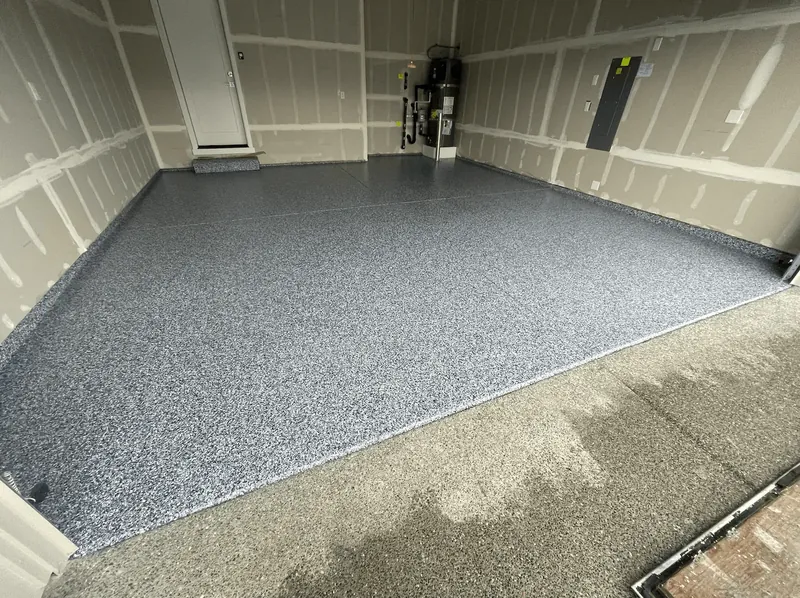
Key takeaways
- Most epoxy floor installers start as helpers on a coating crew. On-the-job training for the closest occupation runs from a few days to a year, and most workers need a high school diploma or equivalent.
- There's no wage series for epoxy installers alone. The closest occupation, floor layers except carpet, wood and hard tiles, had a median of $27.15 an hour ($56,460 a year) in 2025.
- Learn safety before speed: grinding makes silica dust that OSHA's construction standard limits to 50 micrograms per cubic meter over an 8-hour day, and many top coats are made with isocyanates.
- Watching full installations before you start, then a hands-on class on real slabs, shows a crew you know prep, mixing and broadcast before your first day.
- Crew leads run the job day. Owners also price, quote and sell, which is what changes if you go independent.
You don’t need a degree or a license to become an epoxy floor installer. Most people start as a helper on a coating crew, learn prep, mixing and broadcast on the job, and add safety training and a hands-on class along the way. The closest occupation, floor layers outside carpet, wood and tile, had a median wage of $27.15 an hour, or $56,460 a year, in 2025.
Below: what the work is, what it pays, and the steps from helper to crew lead, and to your own company if you want one. If you’re looking for openings now, start with our epoxy flooring jobs page.
What an epoxy floor installer does
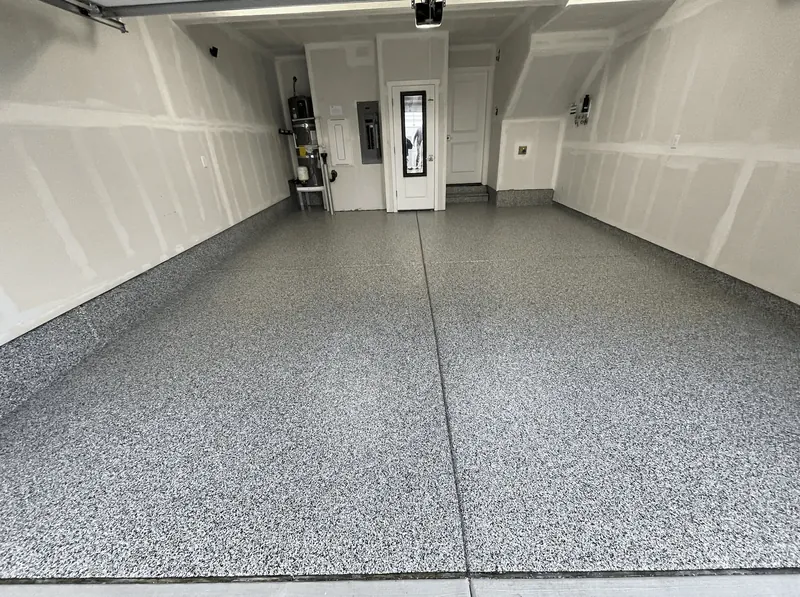
A coating crew turns bare concrete into a finished floor, usually a garage, a basement, a shop or a commercial space. The work is physical and it runs on the clock: once a two-part coating is mixed, it has to be on the floor before its pot life runs out.
A typical job day, in order:
- Load in and protect: grinders, a HEPA dust extractor, edge tools, materials, plastic and tape.
- Test: moisture tests on the slab, plus air temperature, surface temperature and humidity against the product's data sheet. Our guide to concrete moisture testing explains the methods.
- Grind: walk-behind grinder in the field, hand grinder at the edges, to the surface profile the data sheet calls for (concrete surface profile).
- Repair: fill cracks and joints, patch spalls.
- Coat: mix measured batches, spread the base coat, broadcast flake or quartz, scrape and vacuum, then the top coat (flake floor installation).
- Finish: clean up, photograph the floor, and walk the customer through cure times and care.
On a small crew, everyone does a bit of everything. Expect to start with the tasks that can’t ruin a floor, like carrying, masking, vacuuming and scraping, and to move on to edge grinding and mixing as the crew lead trusts you.
What installers earn
There’s no wage series for epoxy installers alone. The closest occupation is floor layers except carpet, wood and hard tiles, which also covers people laying resilient and other floors. Treat these figures as a guide to the trade, not a quote for coating work in your city.
| Percentile, May 2024 | Hourly | Yearly |
|---|---|---|
| 10th | $17.88 | $37,190 |
| 25th | $21.52 | $44,760 |
| Median | $26.13 | $54,340 |
| 75th | $34.80 | $72,390 |
| 90th | $46.72 | $97,180 |
National wages for floor layers except carpet, wood and hard tiles, May 2024. The 2025 median was $27.15 an hour ($56,460 a year); about 29,800 people work in the occupation, and growth is projected to be much faster than average through 2035.
Pay structures vary by company; our guide to hiring epoxy floor installers covers hourly and piece-rate pay from the owner’s side.
Step 1: Get hired as a helper
Many crews hire helpers without coating experience and train them on the job. What helps you get the first job:
- Showing up ready: early starts, long days on your knees, and jobs that can’t wait once the resin is mixed.
- A driver’s license: crews travel to every job, often with a trailer.
- Some basic knowledge: knowing what a grinder, a moisture test and a broadcast are makes you easier to train. The glossary is a quick start.
- Safety habits: wearing the respirator and gloves without being told.
Where to look: coating contractors in your area, franchise and dealer locations of the coating brands (our franchise and dealer program comparisons name several), and supplier stores, whose staff know which crews are busy. Our job board for installers is opening state by state; leave your number to get a text when it opens near you.
Step 2: Learn the safety basics first
Coating work has two hazards you can’t see from the driveway: dust and chemicals.
- Silica dust. Grinding concrete makes respirable crystalline silica. OSHA’s construction silica standard (29 CFR 1926.1153) limits exposure to 50 micrograms per cubic meter of air averaged over an 8-hour day, and lists dust controls for walk-behind floor grinders. That’s why good crews grind with a HEPA dust extractor.
- Isocyanates. Many polyurethane and polyaspartic top coats are made with them. They can cause occupational asthma and irritate the eyes, nose, throat and skin.
- Epoxy hardeners can burn skin and cause an allergy: once you’re sensitized, even small exposures can set off a reaction.
Our epoxy flooring safety guide covers the protective equipment for each task and what OSHA requires of employers. Read a product’s safety data sheet before you open the can; Section 8 lists the protection it calls for.
Step 3: Get trained
Most of the skill comes from the job itself. On-the-job training for the closest occupation runs from a few days to a year, and most workers need a high school diploma or equivalent.
Training speeds that up. Watching complete installations first means you know what comes next before you’re on the slab: The Epoxy Playbook records full installations start to finish, from prep and grinding to flake and top coats, so you can pause and replay any step. A hands-on class then puts the tools in your hands. Hands-on epoxy classes in the US run from about $150 for one day to about $1,750 for five, and most two-day classes cost $495–900; see the classes running today on our training page, and supplier classes vs independent schools for the trade-offs.
Epoxy Business School’s two-day classes are taught by partner trainers and open state by state. They come after the Playbook’s recordings, so the two days go to doing the work.
Step 4: Learn the whole job, not just your station
The installers crews trust most understand why each step is done, not just how. Work toward knowing each of these well enough to explain it:
| Skill | Why it matters | Read |
|---|---|---|
| Moisture testing | Moisture coming up through the slab can lift a coating | Moisture testing |
| Grinding to profile | Coatings need the surface profile their data sheet specifies to bond | Surface profile |
| Mix ratios and pot life | A batch that sets in the bucket is wasted money | Polyaspartic vs epoxy |
| Temperature and humidity | They change cure times and recoat windows | Cure time, temperature and humidity |
| Broadcast and top coat | Flake to refusal, scrape, vacuum, then seal | Flake floor installation |
| Why floors fail | Knowing how floors fail keeps you from causing it | Why epoxy floors fail |
Step 5: Move up to crew lead
A crew lead runs the job day. That means checking the slab and the test results, setting the order of work, sizing batches to the pot life, watching temperature and humidity, checking each coat before the next, keeping helpers safe and busy, and walking the customer through the finished floor. Some crew leads also help measure and estimate.
Judgment matters more than speed here: noticing the soft spot in the slab, the reading that’s off, the edge that needs another pass. Use the job-day checklist until it’s habit.
Step 6: Go independent, if you want to
Some installers stay on a crew for good; others want their own customers. Going independent adds what your employer handled: insurance, licensing, equipment, pricing, quoting and selling. Our learning path for installers going independent covers each step and its cost, and the startup cost calculator adds it up. Check your state’s rules on the license requirements page before you quote your first job, and if you signed a non-compete or non-solicitation agreement with your employer, have a lawyer read it first.
| Stage | What you do | What to learn next |
|---|---|---|
| Helper | Carry, mask, vacuum, scrape, mix under supervision | Safety habits, the order of the job day |
| Installer | Grind, repair, coat and broadcast | Moisture, profile, pot life, cure |
| Crew lead | Run the job day and the crew | Quality checks, scheduling, customer handoff |
| Owner | Price, quote, sell, hire and stand behind the work | The business side: the Seven Systems |
Questions
How much do epoxy floor installers make?
There's no wage series for epoxy installers alone. The closest occupation, floor layers except carpet, wood and hard tiles, had a median of $27.15 an hour ($56,460 a year) in 2025. In May 2024 the middle half of that group earned about $21.52–34.80 an hour.
Do I need a license to be an epoxy floor installer?
Licensing rules generally apply to the contracting business that sells and runs the job, not to the employees who install it. If you plan to quote and sell jobs yourself, check your state's rules on our license requirements page.
How long does it take to become an epoxy floor installer?
On-the-job training for the closest occupation runs from a few days to a year. Hands-on classes run one to five days. Most of the skill comes from working real jobs next to an experienced installer.
What does a crew lead do on a coating crew?
Runs the job day: checks the slab and the test results, sets the order of work, decides batch sizes against the pot life, watches the weather and the cure, checks quality before each coat, trains helpers and walks the customer through the finished floor.
Can an epoxy installer start their own business?
Yes. Installers already know the work; going independent adds insurance, licensing, equipment, pricing and selling. Our learning path for installers going independent covers it in order, and the startup cost calculator adds up the costs.
Keep reading
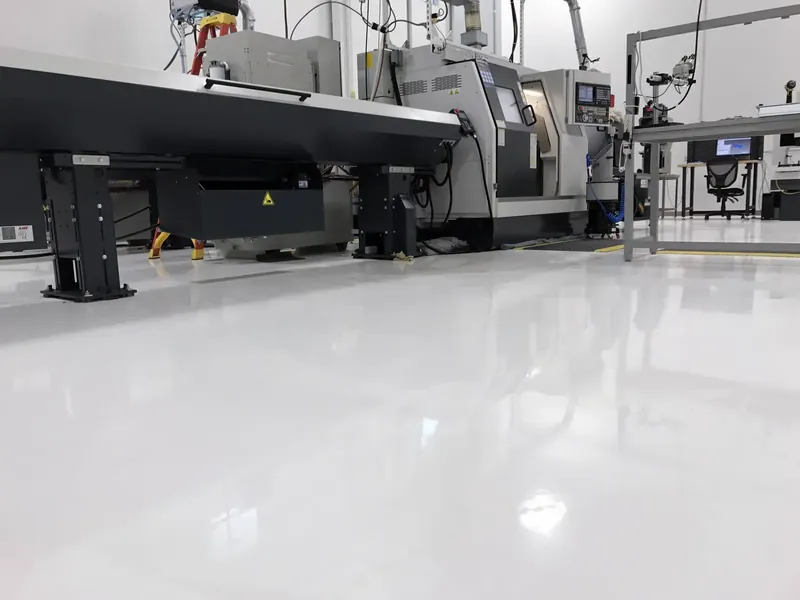
Epoxy flooring jobs
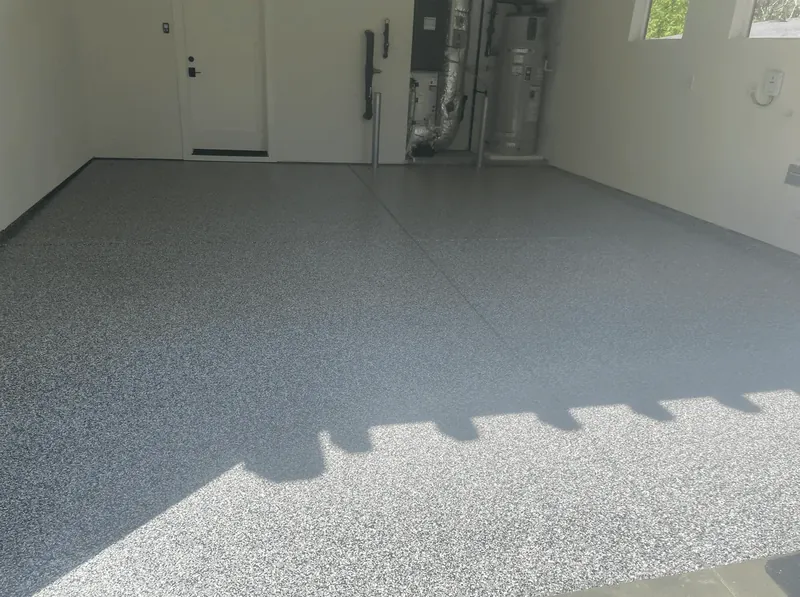
Installers going independent
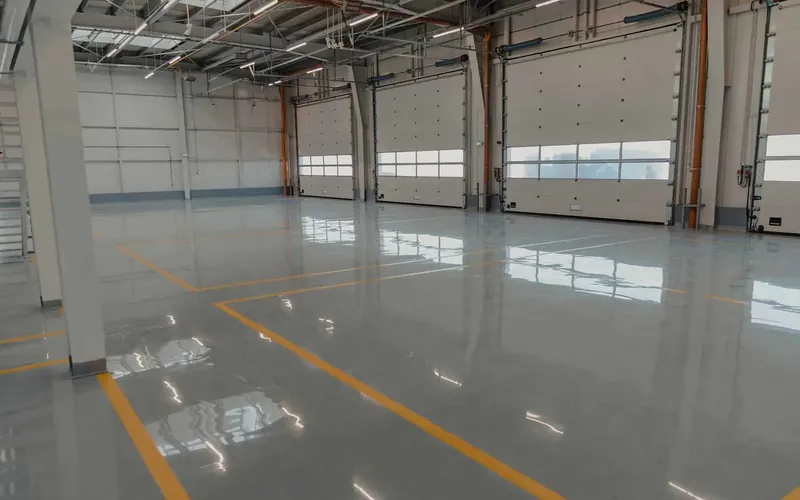
Epoxy flooring safety: chemicals, dust, PPE and the OSHA rules that apply
Epoxy flooring safety for installers: hardener burns and skin allergy, isocyanates, solvents, silica dust and slips, the PPE to wear, and the OSHA rules.
Hiring epoxy floor installers: when, what to pay, and the rules that come with a crew
When to hire for an epoxy flooring business, helper vs installer pay, employee vs contractor tests, workers' comp, respirator rules and overtime on piece rates.